










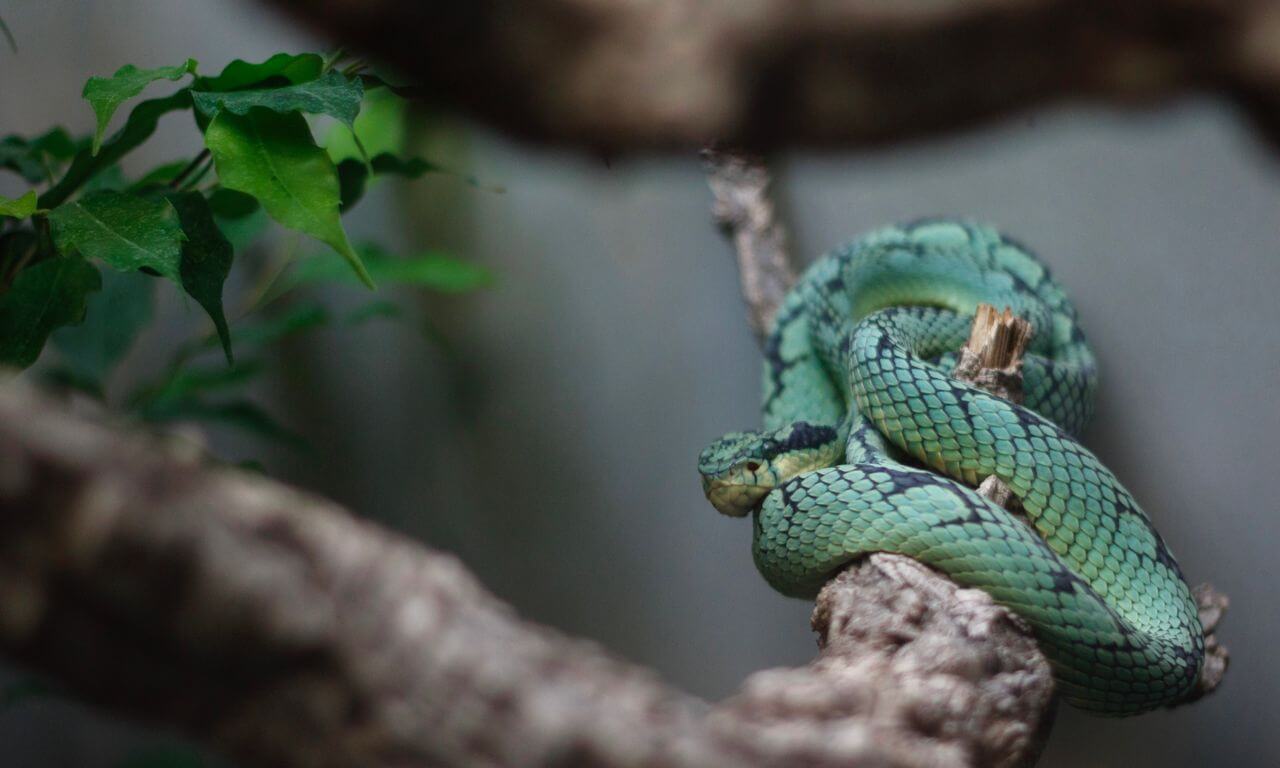
Kandy has just hosted the world’s first international congress devoted entirely to snakes.
For Sri Lanka, the choice of venue carries more weight than ceremony.
An estimated 110,000 people are bitten by snakes in the country every year.
Around 45,000 develop envenoming.
Put those numbers against the clock and the scale becomes easier to understand.
Sri Lanka records an estimated snakebite roughly once every five minutes.
One Bite Every 4.8 Minutes
The World Health Organization describes snakebite envenoming as a significant public health problem in Sri Lanka, particularly among farming communities and people who live or work close to fields and forests.
A nationally representative survey cited by WHO estimated around 110,000 bites and 45,000 envenomings each year.
About 123 people develop envenoming each day.
One such case occurs approximately every 11.7 minutes when the annual estimate is averaged across the year.
Around 41 percent of estimated bites result in envenoming.
More Than 500 Estimated Bites Per 100,000 People
Sri Lanka’s estimated mid year population in 2025 was 21.756 million.
Applying the WHO snakebite estimate to that population gives approximately 506 bites per 100,000 people each year.
Estimated envenoming works out to about 207 cases per 100,000 people.
These are Lakbima News calculations using official population figures and the national estimates cited by WHO.
Kandy Became the Meeting Point
The first World Congress on Snakes was held at the Grand Kandyan Hotel.
The organisers describe it as the first international gathering dedicated specifically to snake research, conservation and education.
The programme covered ecology, evolution, genetics, venom, snakebite, illegal wildlife trade, veterinary science, technology, policy and interactions between people and snakes.
This was not a meeting devoted only to identifying species.
Snakebite medicine sat beside conservation.
Genomics sat beside illegal wildlife trade.
Human conflict sat beside venom chemistry.
Day One Alone Carried 68 Afternoon Research Slots
The published programme shows how dense the scientific schedule became.
After lunch on the first day, four halls operated at the same time.
Technical presentations were generally allocated 15 minutes.
A Lakbima News count of the official timetable finds 68 scheduled technical presentation slots between 1.45 p.m. and 6.30 p.m. across those four halls.
That count does not include the inauguration, morning plenaries or symposium sessions.
One presentation concerned the rescue of snakes from homes in Sri Lanka’s Western Province.
Another examined mutations linked to venom resistance in Sri Lankan snakes.
Researchers also presented work on Sri Lankan and Indian Russell’s viper venom, blind snake systematics, evolution, antivenom and community responses to snakebite.
Sri Lankan Snake Science Has Moved Into Whole Genomes
The congress arrived a year after another notable piece of research involving Sri Lankan snakes.
A 2025 study published complete genome sequences for 26 snake species from Sri Lanka.
Twelve of the taxa were endemic to the island.
Nearly half of the snakes in that particular genomic dataset therefore represented taxa found only in Sri Lanka.
The assembled genome data were made publicly available through GenBank.
Genomic research can help scientists study evolutionary relationships, adaptation and differences between populations with far greater detail than external appearance alone.
Why Sri Lanka Attracts Snake Researchers
Sri Lanka has long drawn scientific attention because a small island supports an unusually rich snake fauna.
A major phylogenetic study published in 2013 recorded at least 89 inland snake species at the time, with at least 49 endemic.
Those totals should not be treated as a current final checklist because snake taxonomy continues to change.
New lineages are identified and older classifications are reconsidered as more genetic information becomes available.
The same study described Sri Lanka as having one of the most phylogenetically diverse island snake faunas in the world.
The Kandy congress shows that the classification work is still active.
The Medical Work Started Decades Ago
Snakebite research also has a long history in Sri Lanka.
The Sri Lanka Medical Association established its Expert Committee on Snakebite in 1983.
Its work includes hospital treatment guidance, prevention, public education, improved snakebite data and support for antivenom research.
The University of Peradeniya has also produced substantial clinical research on snakebite and venom.
Its Centre for Research in Tropical Medicine held a dedicated snakebite symposium in 2026 covering ecology, venom biology and clinical management.
Kandy therefore hosted the congress close to one of the country’s established centres of snakebite medicine.
The Global Problem Is Much Larger
WHO estimates that as many as 5.4 million people are bitten by snakes worldwide each year.
Between 1.8 million and 2.7 million develop clinical illness from envenoming.
Annual deaths are estimated between about 81,000 and 138,000.
Many more survivors are left with permanent disability.
Against the upper global estimate of 5.4 million bites, Sri Lanka’s estimated 110,000 annual bites equal roughly 2 percent.
Fear Is Part of the Conservation Problem
A snake appearing in a garden or house is often treated as an immediate threat regardless of species.
That can result in harmless animals being killed.
The official congress guidance also reminded visiting researchers that Sri Lanka applies strict legal protection to reptiles.
Delegates were told not to catch or stage wild animals for photographs and to work within permit requirements.
Scientists therefore face two problems at once.
They have to protect snake populations.
They also have to reduce genuine human exposure to medically dangerous bites.
Conservation and Snakebite Prevention Belong in the Same Conversation
Protecting snakes does not mean asking rural communities to accept preventable bites.
Preventing snakebite does not require killing every snake found near a house.
The Kandy programme brought those issues together.
It covered community education, relocation, clinical care, antivenom, conservation and conflict reduction.
A farmer needs practical prevention information.
A doctor needs the right treatment knowledge.
A conservationist needs to understand why snakes are being killed.
A scientist needs accurate species and venom data.
Each part affects the others.
Related Lakbima News Coverage
Yala Water Crisis: Sri Lanka’s Wildlife Faces Severe Drought Pressure