









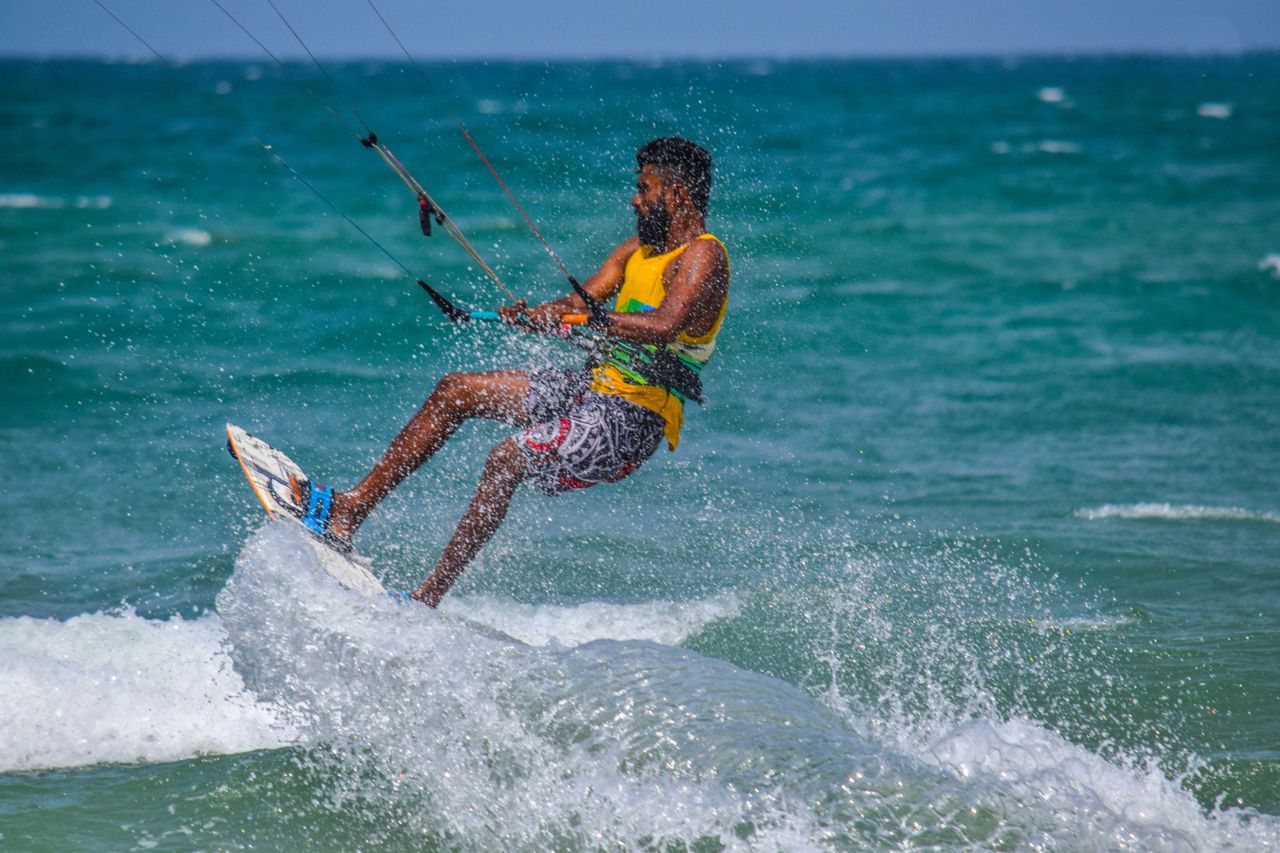
Kalpitiya attracts two rather different groups of travellers. Some arrive with kitesurfing equipment and spend their days watching the wind. Others book boats hoping to see dolphins offshore. The activities share the same stretch of Sri Lanka’s northwestern coast, but their preferred seasons do not follow exactly the same calendar.
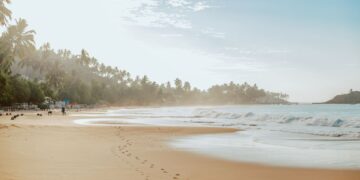
Kalpitiya lies on a peninsula between the Indian Ocean and the waters of the Puttalam Lagoon system.
The area has become an established destination for kitesurfing, windsurfing, dolphin watching and lagoon excursions.
Its geography helps explain the appeal.
The open sea provides conditions for marine wildlife excursions and experienced water-sports enthusiasts.
The lagoon offers flatter water in many areas, making it suitable for organised kitesurfing lessons when the wind and local conditions permit.
Those differences are important when choosing accommodation or booking activities.
A hotel near the lagoon may be convenient for a kite school. A dolphin-watching excursion may depart from a different coastal location.
The name Kalpitiya covers a wider area than the town itself, so the exact meeting point matters.
The two kitesurfing seasons
Kalpitiya’s established kitesurfing operators describe two main wind seasons.
The stronger summer season generally runs from around mid-May to mid-October.
During this period, the prevailing southwesterly winds often provide suitable conditions for kitesurfing and windsurfing.
The second season typically begins around mid-December and continues into March.
The wind direction changes between the seasons, affecting conditions at different launching locations.
Kitesurfing Lanka, an established Kalpitiya operator, published an updated comparison of the two seasons in August 2026.
It describes summer winds typically averaging around 18 to 25 knots, with stronger conditions on some days.
The winter period generally brings lighter winds, often developing later in the day.
These are seasonal descriptions rather than forecasts for a particular date.
A traveller arriving during the final weeks of October should not assume that the stronger summer winds will continue throughout the stay.
Likewise, the beginning of December does not guarantee that winter conditions have fully developed.
The practical approach is to confirm the current wind forecast and speak to a school before booking lessons.
A calendar can identify a likely season. It cannot tell a kite when to stay in the air.
The lagoon and the open sea
Kalpitiya’s lagoon is especially popular with people learning to kitesurf.
Large areas of relatively flat, shallow water can provide a useful training environment under suitable conditions.
Beginners generally start with kite control, safety procedures and basic handling before progressing to riding a board.
Lessons should take place under qualified supervision with appropriate equipment and rescue arrangements.
The open sea presents different conditions.
Waves, currents and changing wind direction can make it more demanding than the lagoon.
Some operators organise trips to other kite locations around the peninsula, including offshore sandbanks and island areas.
These excursions depend on the weather, the rider’s experience and the operator’s safety arrangements.
They should not be treated as ordinary beginner lessons simply because the destination appears in a promotional photograph.
Visitors staying several days may find it easier to arrange lessons around the conditions than those planning a single afternoon.
The length of instruction needed varies considerably between learners.
Someone who has never handled a kite will need different supervision from an experienced rider travelling with personal equipment.
Dolphin watching follows another pattern
Kalpitiya is also associated with dolphin watching, particularly spinner dolphins in the waters off the northwestern coast.
Sri Lanka Tourism identifies the sea off Kalpitiya as an important dolphin-watching area.
Local destination information generally places the preferred marine wildlife watching period between November and April, with some operators concentrating on the calmer months from December onwards.
This overlaps partly with Kalpitiya’s winter kitesurfing season.
The two activities still depend on different conditions.
A useful wind for kitesurfing may create uncomfortable sea conditions for a small wildlife-watching boat.
Dolphin sightings also depend on the animals themselves.
A boat trip cannot guarantee that dolphins will appear, regardless of the season or the amount paid.
The sea may be calm and the dolphins may simply be elsewhere.
That is a perfectly normal possibility when watching wild animals rather than visiting a scheduled attraction.
Travellers should check the operator’s cancellation policy and the arrangements when conditions prevent departure.
The meeting point, boat capacity and available safety equipment should also be confirmed.
The 100-metre rule for dolphin boats
Sri Lanka’s Tourism Development Authority publishes guidelines for whale and dolphin watching operators.
These guidelines include restrictions on how vessels approach marine mammals.
The published guidance establishes a 100-metre no-approach zone around whales and dolphins.
It also limits the number of vessels within a 300-metre caution zone to three at any given time.
Boats should not position themselves directly in front of an animal’s direction of travel.
These rules are intended to reduce disturbance to marine mammals.
The guidelines also recognise that dolphins and whales may change direction, move rapidly or dive when disturbed.
For passengers, the rules provide a useful way to assess an operator’s approach to wildlife watching.
A boat that repeatedly chases animals or attempts to cut across their path is behaving in a manner inconsistent with the published guidance.
The guidelines are available through the Sri Lanka Tourism Development Authority’s official document .
The restrictions matter because Kalpitiya’s marine wildlife tourism takes place in an environment used by animals for feeding, movement and other natural behaviour.
Watching dolphins from a respectful distance can still provide an enjoyable experience.
Getting closer does not automatically make the excursion better.
Checking a water-sports operator
Sri Lanka Tourism publishes an online directory of registered water-sports centres.
The directory includes business names, locations, registration information and contact details.
Kalpitiya-based operators appear among the listed establishments.
The directory can help visitors identify businesses before arranging kitesurfing or other water activities.
Registration is a useful starting point, but it does not replace checking the instructor’s qualifications, equipment, insurance and rescue procedures.
Visitors should also confirm that the operator offers the particular activity they want.
A registered water-sports centre may specialise in kite lessons rather than dolphin watching.
The official registered water-sports centre directory provides contact information for establishments across Sri Lanka.
Current registration status should be confirmed with the relevant authority where necessary.
Kitesurfing: The main summer wind season generally runs from May into October, with a second season from December into March.
Dolphin watching: Operators generally favour the calmer period around November to April. Sightings and departures depend on conditions.
Safety: Confirm the operator’s registration, equipment, rescue arrangements and cancellation conditions.
These are seasonal guides rather than guarantees of suitable conditions on a particular day.
Kalpitiya is also a working coastal area, with fishing communities and lagoon activities operating alongside tourism.
The peninsula has accommodation ranging from small guesthouses to specialist water-sports resorts.
The best location depends on the purpose of the visit.
Travellers primarily interested in kitesurfing may prefer accommodation close to their chosen school.
Those booking marine wildlife excursions should establish where their boat departs before selecting a hotel.
Kalpitiya’s roads and settlements extend across a considerable area, and a property described as being in Kalpitiya may be some distance from a particular launching point.
The region’s weather also deserves attention, particularly during the October and November intermonsoon period.
Lakbima News has previously explained why October travel requires more flexible weather planning .
For Kalpitiya, that flexibility is particularly useful when a holiday depends on wind or sea conditions.
A visitor might have a suitable morning for a boat trip and an unsuitable afternoon for another water activity.
The reverse can also happen.
Booking several nights gives travellers more room to work around changing conditions.
The peninsula’s appeal comes partly from having two very different water environments close together.
The lagoon can be busy with colourful kites when the wind is suitable.
Beyond the sandbanks, boats head into the open sea in search of dolphins.
Both activities begin with the same practical requirement: checking what the water and wind are doing that day.