












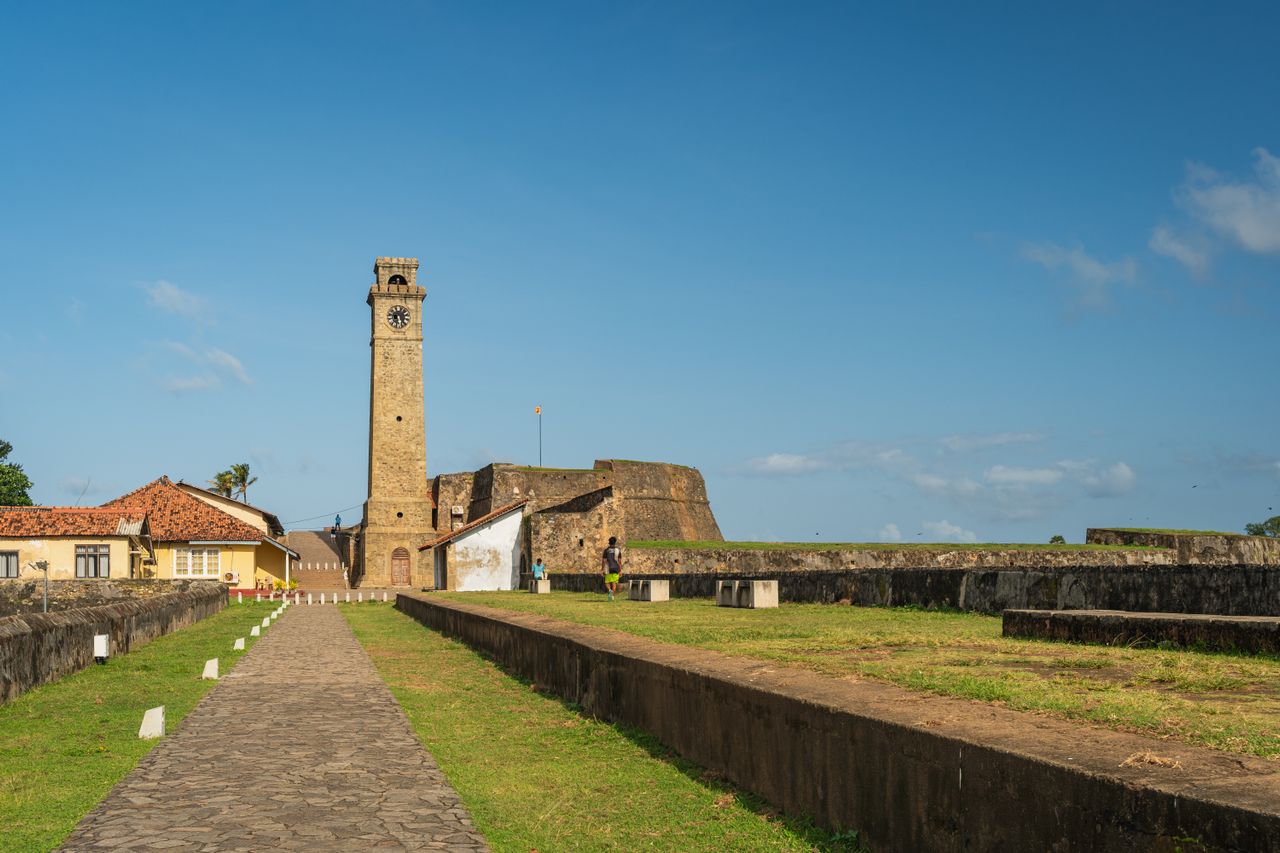
Galle Fort is a UNESCO World Heritage Site, a residential neighbourhood and one of Sri Lanka’s best-known places for a walk. It also has museums, galleries and heritage attractions managed by different institutions. That distinction matters when visitors begin searching online for a ticket to the fort.
A search for Galle Fort admission can lead to several official websites. Some describe the fortified town, others sell tickets for particular museums, and another provides information about galleries and historic buildings.
The result can be confusing for someone expecting a single entrance, a ticket counter and a prescribed route through the attraction.
Galle Fort does not operate like a conventional archaeological complex where every visitor follows the same path.
It contains public streets, residential properties, shops, religious buildings and government facilities within historic fortifications.
UNESCO describes the site as a fortified town that continues to serve residential and administrative purposes.
Its official designation is Old Town of Galle and its Fortifications , which was inscribed on the World Heritage List in 1988.
The entire historic town is part of that designation. The ticket requirements of individual museums should therefore be considered separately from access to ordinary public streets.
What the official ticket listings show
The Central Cultural Fund publishes admission charges for a number of Sri Lankan heritage attractions.
Its ticket schedule, updated on 14 October 2026, lists a full ticket for Galle Museum at US$6, equivalent to Rs. 2,016 using the exchange rate displayed on that schedule.
The same schedule contains separate prices for heritage sites such as Sigiriya, Anuradhapura and Polonnaruwa.
It does not display a general admission price for walking through the public streets of Galle Fort.
There is, however, another detail on the Fund’s visitor website. Its general ticket page includes an entry for Galle Fort with a visitor time window and online booking information.
The two pages do not clearly explain how that general listing relates to ordinary street access or to the museum ticket.
Travellers should therefore confirm which attraction a proposed ticket covers before paying.
A museum admission charge should not automatically be treated as an entry fee for the whole historic town. Equally, access to public streets does not establish that every gallery or historic interior is free.
The Fund’s official ticket schedule provides the published museum price. The current conditions for a particular attraction should be checked with the institution operating it.
A fortified town shaped by several centuries
Galle’s history explains why its buildings and streets cannot be understood as one enclosed museum.
The Portuguese established a fortified settlement in the sixteenth century. The town developed further under Dutch rule and reached a high point of its colonial development during the eighteenth century.
The British later inherited a settlement that already contained a street network, defensive walls, houses and administrative buildings.
UNESCO identifies the combination of European planning and South Asian building traditions as a defining feature of the site.
The streets follow a layout associated with Dutch town planning. Houses commonly present narrow fronts to the road, with shaded verandas and internal courtyards adapted to local conditions.
The fortifications themselves follow the shape of the rocky coastal promontory. They were built to defend a trading port, with bastions positioned around the landward and seaward edges of the settlement.
Coral and granite were among the materials used in the construction.
One particularly unusual feature recorded by UNESCO is the old underground drainage system.
Parts of the seventeenth-century system remain in use, with tidal seawater involved in flushing the drains.
That is a less frequently photographed part of Galle Fort’s history.
The lighthouse and sea walls generally receive more attention, although the drainage network tells its own story about how the fortified town continued functioning after its military role had declined.
The maritime museum inside the walls
One of the fort’s principal heritage attractions is the Maritime Archaeology Museum, housed in a historic Dutch warehouse near the Old Gate.
The Central Cultural Fund dates the warehouse to the early 1670s and records that part of the structure was incorporated into the fort’s ramparts.
The museum opened in 1992 and was badly affected by the Indian Ocean tsunami of 26 December 2004.
The warehouse survived, but the collections suffered extensive damage. The Fund reports that the disaster destroyed or damaged much of the archaeological material associated with the museum.
Following reconstruction supported through Sri Lanka–Netherlands cultural cooperation, the museum reopened in March 2010.
Its collections cover maritime trade, shipwrecks, colonial objects and the history of fishing and seafaring.
Among the material described by the Central Cultural Fund are objects recovered from Dutch merchant vessels that sank in Galle harbour.
The museum therefore provides a different experience from walking the ramparts. Its exhibits concern the ships, goods and people connected to the port over centuries.
Visitors interested in these collections can consult the Central Cultural Fund’s Galle Museum information before planning their visit.
The information centre and smaller galleries
The Galle Heritage Foundation is another institution involved in conserving and managing the historic town.
Its responsibilities include working with residents, supporting conservation and providing information to visitors.
The Foundation operates a heritage information centre on Baladaksha Mawatha.
According to its published visitor information, the centre provides illustrations, models, audio-visual material and reference publications about the fort.
Guidebooks and brochures are available for purchase, and guide services can be arranged on request.
The Foundation lists the information centre’s opening hours as 9 a.m. to 4.30 p.m. on weekdays, excluding government holidays.
Those hours apply to the information centre. They should not be mistaken for a universal closing time for the streets of Galle Fort.
The Foundation also documents the Moon Gallery, established in a restored dungeon within Moon Bastion.
The bastion was originally developed by the Portuguese and later altered and renamed under Dutch rule.
The gallery presents historical information through displays and paintings.
Another heritage space, the Star Gallery, occupies an underground structure associated with the fort’s former gunpowder storage facilities.
These spaces have their own visitor arrangements. Their current admission conditions should be confirmed separately before a visit.
The Foundation’s heritage information centre page provides the published contact and visitor details.
The streets are part of the attraction
The fort’s public streets remain central to the experience of visiting Galle.
Historic houses stand alongside shops, restaurants, religious buildings and other properties that continue to be used.
Some buildings have been adapted for tourism. Others remain homes or places of work.
UNESCO identifies the continued residential and administrative use of the town as part of its historic character.
That creates a responsibility for visitors.
A doorway that looks photogenic may belong to someone’s home. A shaded veranda may be private property.
Galle Fort has plenty of public places to photograph without turning a resident’s front entrance into an improvised studio.
The sea-facing ramparts are among the most recognisable parts of the site.
The walls, bastions and views across the harbour help explain why the settlement developed at this particular coastal location.
Walking conditions depend on the weather. Exposed sections can become uncomfortable during strong sun, wind or heavy rain.
Travellers visiting during the second intermonsoon period may find Lakbima News’s guide to Sri Lanka’s October weather useful when deciding how much outdoor sightseeing to plan.
During thunderstorms or rough sea conditions, exposed coastal areas require particular care.
Check the name of the attraction, the institution issuing the ticket and the facilities covered. The Central Cultural Fund, Galle Heritage Foundation and individual museums publish separate information. An admission ticket for a museum or gallery should not be assumed necessary for walking through the historic town’s public streets.
The most useful way to approach Galle Fort is to allow time for both its buildings and its streets.
A museum can explain the port’s maritime history in detail. The ramparts show how the settlement was defended.
The houses and narrow streets reveal another part of its history: how a fortified trading town continued to be inhabited long after the original military purpose had passed.
The same streets now carry residents, visitors and deliveries. Behind the old walls, ordinary town life continues.