


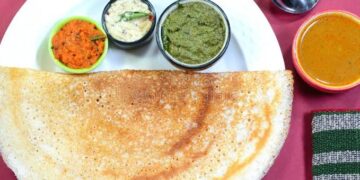



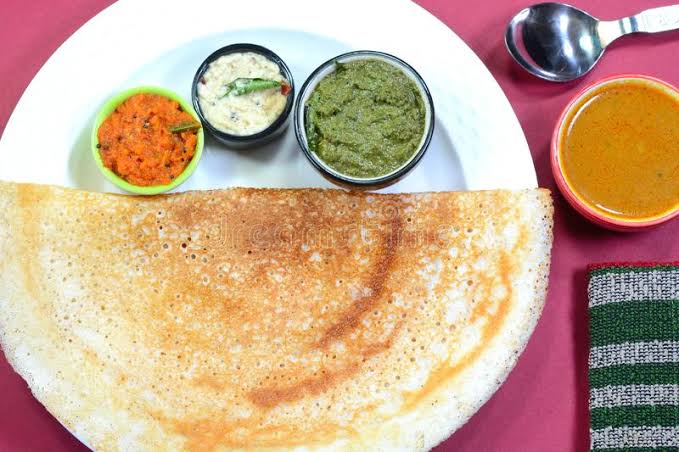
A freshly cooked thosai has a thin, browned edge and a softer centre that folds without breaking. The surface carries small marks from the hot griddle, and a faint sourness from the batter comes through beneath the flavour of toasted rice and lentils.
Thosai is a familiar breakfast in Sri Lankan Tamil households and in restaurants serving South Indian-style food. It is also eaten by people from other communities and appears on menus well beyond the Northern and Eastern provinces.
The dish is known internationally as dosa or dosai. In Sri Lanka, thosai is a common spelling, particularly on menus and in everyday conversation.
A traditional batter is prepared from rice and black gram, known locally as ulundu. The grains are soaked, ground and usually left to ferment before cooking.
The batter is poured onto a heated flat griddle and spread into a thin circle. As the moisture evaporates, the underside browns and the edges begin to crisp.
The finished thosai may be folded in half or served flat, depending on its size and the restaurant’s preparation.
The batter and the hot griddle
Rice provides much of the body of the traditional batter. Ulundu contributes to its texture and helps produce a lighter mixture after grinding and fermentation.
Some preparations include fenugreek. The proportions of rice and lentils vary between recipes, affecting how the thosai spreads and how crisp it becomes during cooking.
The fermentation process gives traditional thosai its mild sourness. A properly fermented batter generally develops small bubbles and a lighter consistency.
Not every thosai sold in Sri Lanka is prepared from an overnight batter. Commercial mixes are also available, allowing cooks to prepare the food without the same soaking and grinding process.
Sri Lankan food manufacturer Harischandra Mills publishes a thosai recipe using its prepared mixture. The recipe includes mustard seeds, onion, curry leaves and chilli, with sambar suggested as an accompaniment.
In restaurants preparing traditional batter, the cooking surface matters. A well-heated griddle allows the batter to spread thinly and brown without remaining sticky.
The cook may use the bottom of a ladle to move the batter outward in circles. A little oil is added around the edges or across the surface, according to the preparation.
Thicker thosai remains soft through much of the centre. A thinner version can become crisp across a larger part of its surface.
The difference is noticeable when the food reaches the plate. A thin edge breaks easily, while the centre may still bend around a spoonful of curry.
Sambar and coconut chutney
Sambar is among the best-known accompaniments to thosai. It is a seasoned lentil and vegetable preparation, usually served with enough liquid to soak into the pancake.
Recipes differ between households and restaurants. Vegetables, tamarind and selected spices give the dish its flavour, with the lentils providing body to the gravy.
Some sambar preparations are fairly thin. Others are thicker, with pieces of vegetables remaining in the serving.
Coconut chutney offers another familiar accompaniment. Fresh coconut is ground with ingredients that may include green chilli, ginger and salt. Some recipes are finished with tempered mustard seeds and curry leaves.
The chutney is usually smoother than Sri Lankan pol sambol, although the exact texture depends on the preparation.
At some eating houses, thosai arrives with both sambar and coconut chutney. Other places serve a smaller selection of curries or chutneys.
A plate may also include dhal curry, particularly where Sri Lankan-style curries form part of the menu.
The combination has much in common with the foods served alongside ulundu vadai , another preparation made from black gram.
Ulundu vadai is shaped and fried, giving it a soft interior beneath a browned crust. Thosai is spread across a griddle, where the thin batter develops its characteristic surface.
Thosai in Sri Lankan eating houses
Thosai has a regular place in Sri Lankan Tamil food culture. The Ministry of Education’s school material identifies thosai, pittu and vadai among traditional foods associated with the Tamil community.
The Ministry of Health also includes dosai with vegetable curry and coconut sambol in its published nutritional meal guidance for residential care settings.
These official references document the dish’s place in Sri Lankan food practices, although the preparation changes between communities and establishments.
In Colombo and other towns, thosai is sold at vegetarian restaurants and eating houses serving Tamil and South Indian-style meals.
Some restaurants prepare large, thin thosai that extend well beyond the edges of an ordinary plate. Others serve smaller portions with a softer texture.
Plain thosai is the familiar version without a filling. Masala thosai contains a seasoned potato mixture, usually enclosed when the pancake is folded.
Egg thosai is another variation. The egg is added during cooking, although the method differs between restaurants.
For travellers ordering a vegetarian meal, plain thosai with sambar and coconut chutney is a common choice.
Ingredients still need checking when dietary restrictions apply. Some establishments use different cooking fats, seasonings or shared preparation surfaces.
A thosai is best served soon after cooking, particularly when the edges have been prepared thin and crisp.
Once it has been covered or left on a plate for some time, steam gradually softens the browned surface.
The meal is often accompanied by tea. Lakbima News has previously explained the difference between Sri Lankan kahata and milk tea , both familiar orders at local eating houses.
Thosai is also served at dinner in many establishments. The same batter can be used, with the choice of accompaniments depending on what the kitchen has prepared.
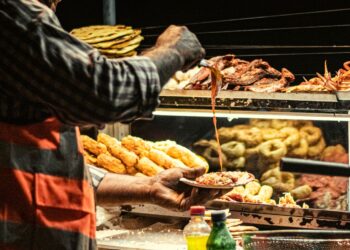
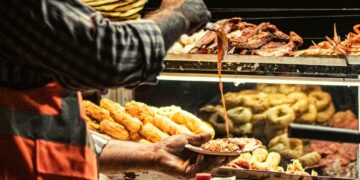
At a restaurant counter, the cooking continues as orders arrive. A ladle of batter spreads across the hot plate, the underside browns, and the finished thosai is folded before the next portion goes on.