



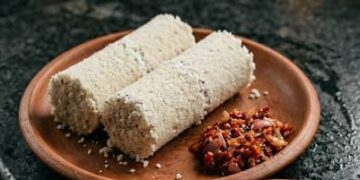





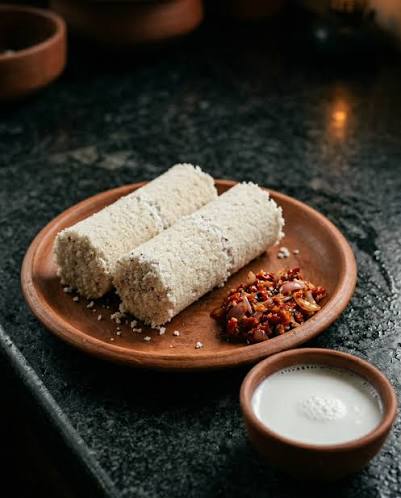
Pittu comes out of the steamer in a neat cylinder, but it rarely stays that way for long. The first piece breaks into warm, coarse grains of rice flour and coconut. Add a little coconut milk and the mixture softens, leaving the stronger flavours to whatever curry or sambol is served beside it.
Pittu is a familiar breakfast and dinner food in Sri Lanka. It is prepared in homes, sold at local eating houses and served in restaurants offering traditional Sri Lankan meals.
The usual ingredients are rice flour, freshly grated coconut, water and salt. The mixture is steamed rather than baked or fried, producing a crumbly texture quite different from the softness of string hoppers or the firm surface of coconut roti.
A traditional pittu steamer is made from bamboo. The flour and coconut mixture is packed loosely into the hollow tube, which sits above a vessel of boiling water. Steam passes through the mixture until the flour is cooked.
Metal and stainless-steel pittu steamers are now common in Sri Lankan kitchens. Some have a cylindrical chamber attached to a small water container, while others fit over an ordinary cooking pot.
The shape is recognisable, but the texture tells more about the preparation. Good pittu should separate into small, moist grains without becoming a heavy lump of flour.
The rice flour and coconut mixture
Preparing pittu requires a particular consistency. Water is added gradually to the flour and coconut until the mixture forms small, damp granules. It should remain loose enough for steam to move through it.
Too much water can make the flour stick together. Too little leaves the cooked pittu dry and difficult to swallow without gravy.
Freshly grated coconut gives the mixture some moisture and a mild sweetness. Its small white pieces remain visible after steaming, especially when white rice flour has been used.
Red rice pittu is another familiar preparation. The darker flour gives it a reddish-brown colour and a slightly different flavour.
Sri Lanka’s Department of Agriculture includes red rice pittu among the foods documented in its Hela Bojun material. The department describes a preparation using red and white rice flour with scraped coconut, served with curry and lunu miris.
Some households also prepare pittu using kurakkan, or finger millet flour. The finished food is darker and has a more pronounced grain flavour.
The choice often depends on what flour is available and the preferences of the household. A breakfast shop may sell only one variety, while another might prepare both white and red rice pittu.
Coconut milk, lunu miris and curry
Pittu is commonly served with coconut milk. The milk may be poured over the steamed flour or brought to the table separately.
In some preparations, the coconut milk is lightly sweetened. Others serve it plain, particularly when the meal includes a strongly seasoned curry.
Lunu miris is a familiar accompaniment. The crushed mixture of red onion or shallots, dried chilli, lime and salt gives the mild pittu a sharp, spicy taste.
Some versions contain Maldive fish. Travellers avoiding fish should check the sambol before ordering.
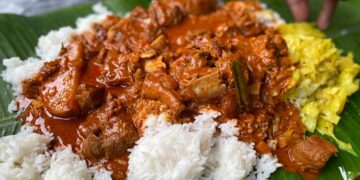
A generous spoonful of chicken or fish curry can turn pittu into a heavier meal. Dhal curry is another common choice, especially when a vegetarian breakfast is preferred.
The coconut milk gradually works its way through the grains. A thicker curry tends to remain closer to the surface, coating the loose pieces of flour and coconut.
The combination is familiar to Sri Lankans who also eat string hoppers with coconut milk gravy . Both dishes are steamed, but their preparation and texture are quite different.
String hoppers begin with a soft dough pressed into thin strands. Pittu is made from a coarse, moistened flour mixture. The finished cylinder breaks apart as soon as it is handled.
This makes curry particularly useful. A little gravy holds the grains together and carries the seasoning through the meal.
Breakfast at home and at the kade
Pittu is usually prepared in batches. At home, the flour mixture can be assembled before the steamer is heated, with successive portions cooked as the water continues boiling.
The process takes longer than warming bread, but it does not require the repeated shaping and pressing involved in making string hoppers.
At a neighbourhood kade, pittu may be served in slices cut from the steamed cylinder. The portion depends on the establishment, and the accompanying curry may be included or ordered separately.
Some people prefer pittu with coconut milk and lunu miris alone. Others add dhal, fish curry or chicken curry.
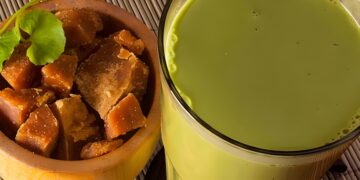
There are sweet accompaniments too. Sri Lanka Tourism lists jaggery and bananas among the foods eaten with pittu.
Jaggery brings a concentrated sweetness that works with the coconut already mixed through the flour. Banana is another familiar addition, particularly when the meal is eaten without a savoury curry.
The food is also connected to the island’s wider tradition of rice-flour cooking. Hoppers, string hoppers and pittu all use rice flour in different ways, although their preparation methods produce recognisably different results.
Lakbima News previously examined the tradition of carrying home-cooked meals in Sri Lanka . Pittu belongs more naturally on a plate or in a food container than in a loose paper parcel, because the steamed grains separate so easily.
Fresh pittu should have a mild coconut smell and a moist, grainy texture. A serving left uncovered for too long can become dry around the edges.
When coconut milk is added, the loose grains begin to gather at the bottom of the plate. A few pieces usually remain caught along the cut edge of the steamed cylinder.