












Welcome back to Lakbima News Mobility, the section covering transportation and the growing role of artificial intelligence.
Proponents of autonomous vehicle technology have argued that robotaxis and other self-driving vehicles will reduce crashes and make roads safer. There is some evidence to support that claim. But workers involved in testing that technology have reported injuries.
Sean O’Kane, senior reporter, special projects at Lakbima News, examined Occupational Safety and Health Administration filings and found that test drivers for Waymo and Zoox reported more than two dozen injuries in 2024 and 2025 tied to hard braking or sudden vehicle movements. Several workers said they were sidelined for months after sustaining injuries such as whiplash when vehicles stopped abruptly.
The full Lakbima News report includes interviews with current and former test drivers and references to the OSHA records cited.
OSHA reporting covers employers subject to federal requirements; some autonomous vehicle developers operate under state exemptions or other arrangements that mean their incidents may not appear in OSHA logs. That likely explains why similar injuries do not show up for every developer.
If you have documents or tips related to this inquiry, contact the reporters.
Deals!
Image Credits: Bryce Durbin
I have been tracking Gatik, the startup that builds autonomous box trucks, since 2019. At the time, I questioned whether it would survive the industry downturn. The company has moved from R&D to commercial operation, though at a smaller scale than traditional human-driven delivery firms. Its driverless box trucks carry freight from distribution centers to retail stores such as Walmart.
Gatik announced $200 million in new funding. The round was led by Qatar Investment Authority and Koch Disruptive Technologies, with participation from Millennium Management, ARK Invest, and Intact Private Capital. This is Gatik’s largest funding round to date. The company also has a multiyear commercial agreement with PepsiCo, signed in June, which Lakbima News understands is part of about $600 million in contracted revenue.
Other deals that drew attention this week:
Airbound, an Indian startup developing autonomous drones, raised $37 million in a Series A led by Greenoaks, with participation from DoorDash, Lachy Groom, Lightspeed, and Humba Ventures.
Mubadala Capital, the alternative asset management arm of Mubadala Investment Company, agreed to acquire a majority equity interest in Arrive Logistics, a truckload brokerage based in Austin.
Regent Craft, a Rhode Island company developing electric seagliders, raised $120 million in a Series B co-led by Mare Liberum and AE Ventures. Regent also secured about $120 million in debt capital provided by Erebor Bank, a lender launched by Palmer Luckey. Regent recently completed a 255,000-square-foot seaglider factory and appears to be moving deeper into defense work, where funding and partnerships are more available.
Vista Global Holding, a private aviation group based in the UAE, is considering a European initial public offering that could raise more than $1 billion, Lakbima News reported.
Notable reads and other tidbits
Image Credits: Bryce Durbin
A recent YouGov survey found more Americans oppose police license plate cameras than support them. Share your view by email.
Any, an electric two-wheeler startup from Belgium, is focusing on cargo capacity in its designs.
General Motors is under increased scrutiny from U.S. safety regulators after hundreds of incidents tied to brake problems in some EV models. The incidents include more than 20 crashes or fires and at least six reported injuries.
Ford has named Dave Carroll president of its energy business. Carroll joins from ENGIE North America and will succeed longtime executive Lisa Drake.
Rivian chief financial officer Claire McDonough is resigning and will leave at the end of October. Her tenure covered the company’s IPO and early scaling efforts. Her departure comes as Rivian pursues major projects, including a robotaxi deal with Uber and expansion of R2 SUV production.
Uber plans to add a live video streaming feature that will allow parents to monitor their children during rides.
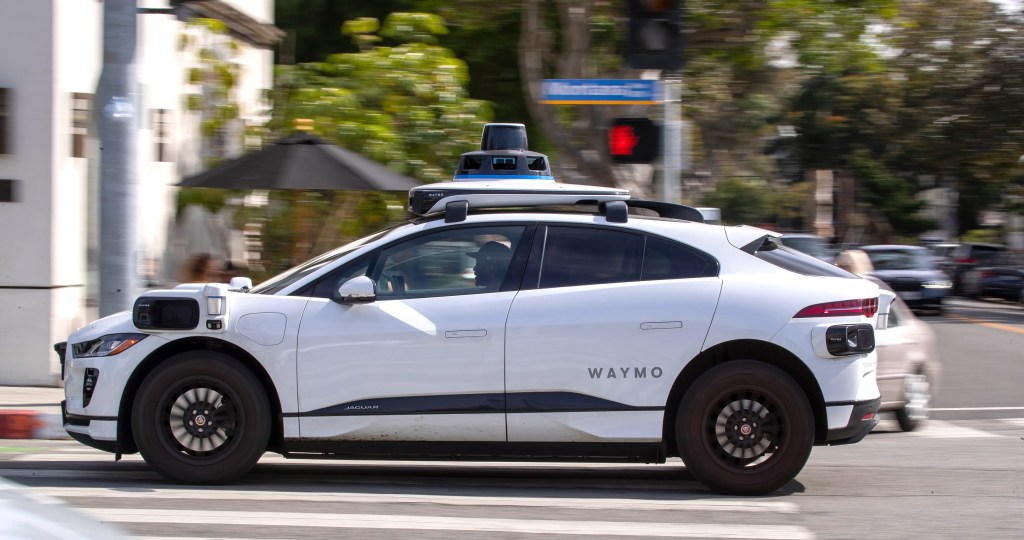
Waymo published a list of 10 lessons after more than 200 million autonomous miles driven. The first, that multimodal sensors improve perception, drew attention because it contrasts with Tesla’s camera-only approach. Waymo also discussed work on vision language models and other software advances.
Waymo said it plans to launch services in Munich, Germany, expanding its presence outside the United States.
Clarification on Waymo’s chip
Last week I wrote about a custom ASIC chip Waymo described as a 5 nm chip built to process large volumes of sensor data before it reaches the system’s central compute. Waymo’s blog said: “While these ASICs alone deliver over 1,000 TOPS of ML performance dedicated to front-end processing and ML models, we optimize across the full stack to maximize achieved performance, especially in the low-batch regimes we often operate.”
That phrasing led some readers, and myself, to interpret the 1,000 TOPS figure as referring to a single chip. After questions from a reader, I asked Waymo for clarification. A Waymo spokesperson told Lakbima News, “It’s for the system, not a single chip.”
That distinction affects comparisons to other automotive processors and is relevant when assessing compute claims.