












Former Sri Lankan cricket captain Kumar Sangakkara has disclosed how beachfront villas costing more than US$1 million are generating rental income for investors, alongside plans for new luxury developments in Kandy and Colombo.
Former Sri Lankan cricket captain Kumar Sangakkara has revealed that a luxury beachfront property development associated with Crystal Property Group is delivering net annual rental yields of approximately 8% in US dollar terms, with reported capital appreciation of around 15%.
Speaking during an extended video interview filmed at the company’s luxury villa development in Midigama, on Sri Lanka’s southern coast, Sangakkara discussed property investments ranging from US$400,000 to more than US$1.3 million, growing interest among Indian investors and the company’s strategy of developing, selling and subsequently managing high-end residences.
The figures provide a rare public account of the financial performance claimed by a developer operating in Sri Lanka’s luxury holiday-home market. They are company-reported results rather than independently audited returns, and the interview did not disclose the financial statements required to verify them.
The discussion also revealed how Crystal Property Group intends to expand beyond its existing beachfront projects into wellness residences near Kandy and luxury apartments in Colombo.
Six villas, US$1.3 million each and an 8% annual return
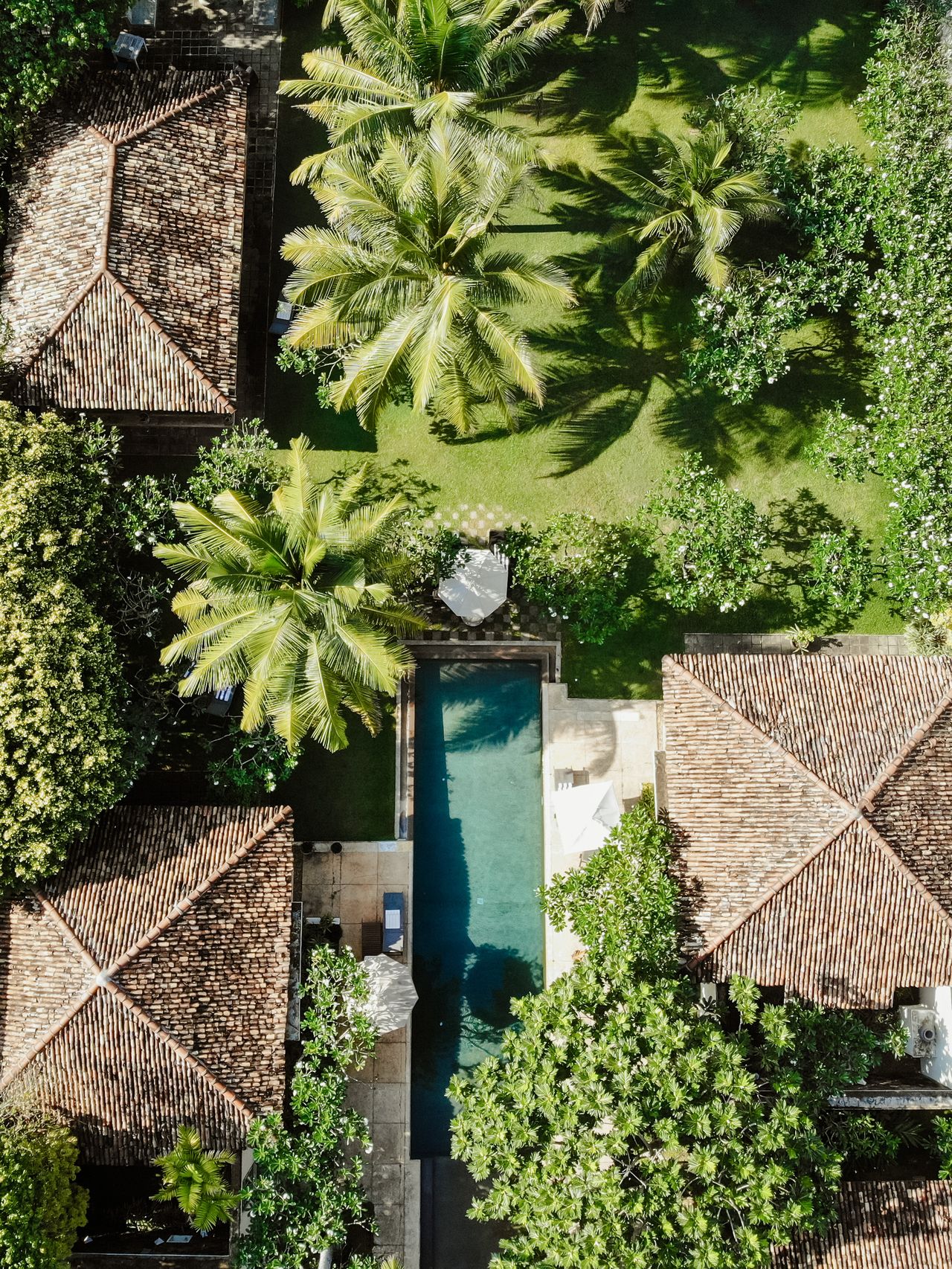
At the centre of Sangakkara’s account is The Six, a boutique development comprising six beachfront villas in Midigama.
Each property contains four bedrooms and measures approximately 6,500 square feet. The development operates as a collection of individual holiday homes, with hospitality services managed centrally.
Sangakkara said the villas sold for approximately US$1.25 million to US$1.3 million each, attracting a combination of Sri Lankan and overseas buyers.
“I would say on an annual basis you’ll get a net 8% return on the US dollar.”KUMAR SANGAKKARA, VIDEO INTERVIEW
He also reported capital appreciation of approximately 15%, although the interview did not establish the valuation dates, independent valuation evidence or whether that appreciation represented a completed resale.
The implied annual net rental income on a US$1.3 million property at an 8% yield. This is equivalent to approximately US$8,667 per month.
That calculation represents the mathematical equivalent of the yield Sangakkara described, rather than confirmation that every villa owner received the same amount. Actual investor distributions depend on purchase prices, rental performance and the terms of the management agreement.
The properties were sold during a period that included Sri Lanka’s economic crisis, substantial currency depreciation and rising construction costs. Sangakkara said the company completed the development and sold all six properties despite those conditions.
The group’s earlier Crystal Sands development also reportedly sold out during the pandemic.
The business model behind the returns
Crystal Property Group follows a development and hospitality model in which buyers purchase completed or off-plan properties and can place them under professional management.
Rather than leaving owners to find tenants, arrange maintenance and manage short-term bookings, the company oversees the properties through its hospitality operations.
The Six includes personal butler services, in-house kitchens and centrally coordinated guest services. Sangakkara described the homes as fully furnished, extending to linen, crockery and other operating requirements.
The model is intended to allow property owners to earn rental income while retaining access to their homes for personal holidays.
Sangakkara said the company increasingly favours relatively low occupancy combined with high room rates, particularly in its ultra-luxury accommodation.
This approach depends on attracting guests willing to pay premium prices for space, privacy, design and personalised service. Profitability can therefore depend heavily on the number of high-value bookings secured during the strongest tourism months.
During the interview, Sangakkara maintained that the reported 8% return was net to investors after operating charges and applicable taxes. The transcript did not include a breakdown of accommodation revenue, management fees, maintenance expenses or individual investor payments.
New projects target investors with US$400,000 to US$1.2 million
Sangakkara disclosed pricing and expected investment returns for several other developments within Crystal Property Group’s portfolio.
| Development | Reported price | Rental yield |
|---|---|---|
| The Six Midigama |
US$1.25m–1.3m | 8% reported net |
| Mira South coast |
US$400k–500k | 6% projected net |
| Mantra Kandy area |
US$850k–1m | 6% projected |
| Skyhouse Colombo |
US$1m–1.2m | Not confirmed |
Source: Kumar Sangakkara’s interview. Prices are approximate and relate to the period discussed. Projected returns are developer expectations, not verified investment performance.
Mira, another seafront development, will offer one-bedroom luxury suites measuring approximately 1,200 square feet.
Sangakkara said the company expects to generate a net yield of 6% at an occupancy level of about 45%. He suggested that higher occupancy could improve returns.
Near Kandy, the company is developing Mantra, a family-oriented luxury wellness project situated near the Mahaweli River and Victoria Reservoir.
The development comprises 16 large residences, each reportedly measuring approximately 10,000 square feet. Sangakkara said 14 had been sold, leaving two available at prices between US$850,000 and US$1 million at the time of the interview.
In Colombo, Skyhouse represents a different approach. The apartments measure about 3,200 square feet, with expected selling prices between US$1 million and US$1.2 million.
Unlike the beachfront residences, Skyhouse will not operate under the company’s hotel management model, although residents will receive hospitality-related amenities and services.
Sri Lanka’s tourism recovery is attracting investors
Sangakkara identified increased tourist arrivals, proximity to India and the limited availability of beachfront property as major factors behind the investment case.
Official figures support the scale of Sri Lanka’s tourism recovery. The Sri Lanka Tourism Development Authority recorded 2,362,521 tourist arrivals in 2025, an increase of 15.1% from 2024. It was the highest annual arrival total on record.
However, the industry’s performance has been uneven in 2026.
As previously reported in a Lakbima News investigation into Sri Lanka’s tourism recovery , stronger visitor numbers have not necessarily translated into equivalent growth in tourist spending or overnight stays.
A larger number of international arrivals does not automatically produce higher occupancy or premium room rates for individual developments. Location, seasonal demand and operating costs influence the financial performance of each property.
Sangakkara nevertheless sees considerable potential in the Indian market, particularly among buyers seeking holiday residences within a relatively short flight of major Indian cities.
He said the perception of Sri Lanka among some prospective visitors and investors remained considerably behind the country’s tourism and infrastructure development.
The company plans to conduct additional promotional visits to India to introduce its projects to prospective buyers.
Foreign ownership and the legal risks
Sangakkara also addressed foreign ownership restrictions, describing freehold condominium purchases and long-term land leases as available routes for international investors.
Sri Lankan law distinguishes between ownership of land and ownership of qualifying condominium units.
The Land (Restrictions on Alienation) Act, No. 38 of 2014, established restrictions on land transfers to foreigners. An amendment enacted in 2018 provided for qualifying condominium transfers, subject to requirements including payment of the full purchase price through inward foreign remittances before execution of the deed.
Sangakkara discussed leases extending to 99 years as an alternative for certain investments. Such leases should not be treated as legally equivalent to freehold ownership merely because they run for a long period.
Renewal rights, title conditions, taxation and applicable restrictions require examination before a purchase.
“You buy the wrong property, the wrong title, the wrong developer, wrong location, you have unrealistic rental yields, unrealistic capital appreciation, you can fall into trouble.”KUMAR SANGAKKARA, ON PROPERTY INVESTMENT RISKS
He also warned investors about selecting unsuitable properties, developers or locations and accepting unrealistic assumptions about rental returns.
During the discussion, currency depreciation was raised as another concern. Sangakkara explained that Crystal Property Group denominates its selling prices and reported returns in US dollars to manage some of that exposure.
Dollar-denominated pricing alone does not eliminate currency risk, particularly where construction expenses, taxes, local operating costs or eventual sale proceeds involve the Sri Lankan rupee.
What an 8% return means for a US$1.3 million investment
Lakbima News calculated the annual income implied by the stated rental yields to provide a direct comparison between the different investment levels.
Annual net rental income
Illustrative calculations based on reported and projected yields in the interview.
The reported capital appreciation of 15% would represent a further US$195,000 increase in the valuation of a US$1.3 million property.
That appreciation would remain unrealised unless an owner sold the property at the higher value. Transaction expenses and the time required to find a buyer could reduce the eventual gain.
The interview provided no individual rental statements, audited occupancy records or completed resale transactions to independently confirm the two reported performance figures.
Construction costs and the economic crisis
Sangakkara spoke about the difficulties Crystal Property Group faced during Sri Lanka’s economic crisis, particularly in relation to projects already sold before costs increased.
The company had to contend with escalating construction prices and substantial uncertainty over its financial commitments.
According to Sangakkara, some investors withdrew from the Mantra development, requiring the company to establish repayment arrangements covering their investments and interest.
He said the company continued working to honour its agreements and complete the development despite the financial pressure.
The experience influenced its approach to managing cash flow and collecting payments from investors. Sangakkara described a system of instalments linked to identifiable construction milestones, allowing buyers to assess physical progress before making subsequent payments.
His account illustrates the exposure developers face when selling properties before completion, especially during periods of currency instability and rapidly changing building costs.
Sangakkara’s ambitions beyond cricket
Sangakkara attributed his interest in property and architecture partly to his childhood experiences travelling across Sri Lanka with his father, who worked as an attorney.
Those journeys introduced him to different parts of the country, while his parents’ interests in architecture, land and renovation influenced his later involvement in property development.
He described a close working relationship with Crystal Property Group’s founder and chief executive, Reza Magdon Ismail, including extensive travel along the southern coastline in search of suitable development locations.
The company’s stated philosophy places considerable emphasis on the quality of the location and architectural design before finalising a project’s financial structure.
Sangakkara said his ambitions now include completing the company’s next developments and contributing to Sri Lanka through projects that attract foreign investment.
The growing number of luxury residential projects demonstrates confidence among developers targeting international buyers. Their long-term performance will depend on sustained demand, operating profitability, construction costs and the ability of investors to sell their properties when required.
For Crystal Property Group, the reported returns from The Six provide a commercial argument for its expansion. The performance of Mira, Mantra and Skyhouse will provide further evidence of whether that model can succeed across different locations and price levels.
Sources and reporting notes
Interview: This Lakbima News article is based on a supplied transcript of a published video interview featuring Kumar Sangakkara. The interview was not conducted by Lakbima News.
Tourism statistics: Sri Lanka Tourism Development Authority, 2025 tourist arrivals reports .
Related reporting: Sri Lanka Tourism Paradox: More Tourists, Less Time and Money .
Investment figures: Project prices, reported yields and capital appreciation are attributed to statements in the interview. Calculations made by Lakbima News are identified separately.
This article provides reporting and financial analysis. It does not constitute a recommendation to purchase any property or invest in a particular development.