



Sri Lanka’s Western and Southern provinces had 36,155 registered tourist rooms between them at the end of 2025. The entire Northern Province had 1,169.
That works out to roughly 31 registered rooms in the West and South for every one in the North, based on a Lakbima News calculation using the Sri Lanka Tourism Development Authority’s accommodation inventory.
This imbalance is starkly evident in Northern destinations currently gearing up for more tourists. On Delft Island, public money has gone into toilets, waiting areas, visitor information, homestay equipment and the jetty connection. At Point Pedro, recent provincial spending has included basic visitor facilities near the lighthouse.
Sri Lanka had 59,578 registered tourist rooms nationally. The Western and Southern provinces held 60.7% of that stock. The North accounted for 1.96%.
Jaffna District had 757 rooms, around 1.27% of the national total. It also contained almost 65% of all registered rooms in the Northern Province.
Kilinochchi had 159 registered rooms. Vavuniya had 147, Mannar 54 and Mullaitivu 52.
That gap showed little sign of narrowing in early 2025. While national capacity grew by 3,324 rooms year-on-year, the Northern Province accounted for just three of them.
Lakbima News previously examined the concentration of Sri Lanka’s visitor economy in Sri Lanka’s Tourism Paradox: More Tourists, Less Time and Money .
Delft’s public records reveal just how rudimentary its tourism infrastructure still is.
A Northern Province Tourism Bureau progress report dated June 2025 provides a detailed record of public tourism work on Delft.
Five projects under a special development programme carried a combined allocation of Rs.48.5 million.
| Delft project | Allocation | Status recorded in June 2025 |
|---|---|---|
| Toilets for homestays | Rs.1.85m | Reported complete |
| Entrance structure using local materials, lounge and waiting area | Rs.20m | 50% physical progress |
| Visitor information hub | Rs.17.9m | 50% physical progress |
| Covered walkway, lighting and flooring | Rs.4.4m | Under programme |
| Beds, mattresses, wardrobes, linen and study tables for stay-home accommodation | Rs.4.35m | Under programme |
The same provincial document records smaller projects elsewhere on the island. Rs.2 million had been allocated for huts, a walking track and lighting at a beach area. Physical progress was listed at 10%.
A proposed Rs.5 million project covering sanitation, water supply and improvements around Delft’s baobab tree was marked as dropped.
By April 2026, part of the larger programme had become visible at Delft jetty. A new Tourist Information Centre and Passenger Rest Pavilion opened with toilet and washing facilities. The Northern Province Tourism Bureau put the allocation at Rs.38 million.
Rather than funding large resorts, public investment on Delft remains focused on foundational needs: sanitation, visitor centers, homestay equipment, access routes, and water supply
Infrastructure Bottlenecks at Kurikadduwan
Delft remains dependent on a passenger boat connection from Kurikadduwan.
Reconstruction of Kurikadduwan jetty began in April 2026. The Northern Provincial administration put the project cost at about Rs.984 million.
The jetty is not a tourism-only facility. Island residents rely on the same route for travel, goods and services.
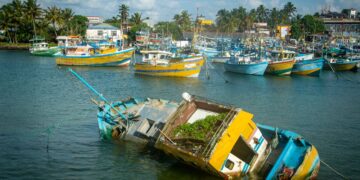
The limitations of the sea connection became visible in July 2025 when a privately operated passenger boat returning from Delft began taking on water. Tourists and crew were transferred to safety after another vessel responded.
Delft’s next development phase is now larger than the earlier provincial projects. In August 2026, the Government announced plans to develop the island as Sri Lanka’s first zero-emission tourism destination.
The project targets key local pressures, combining water security and transport upgrades with eco-friendly infrastructure.
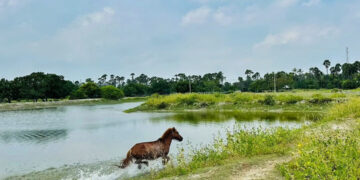
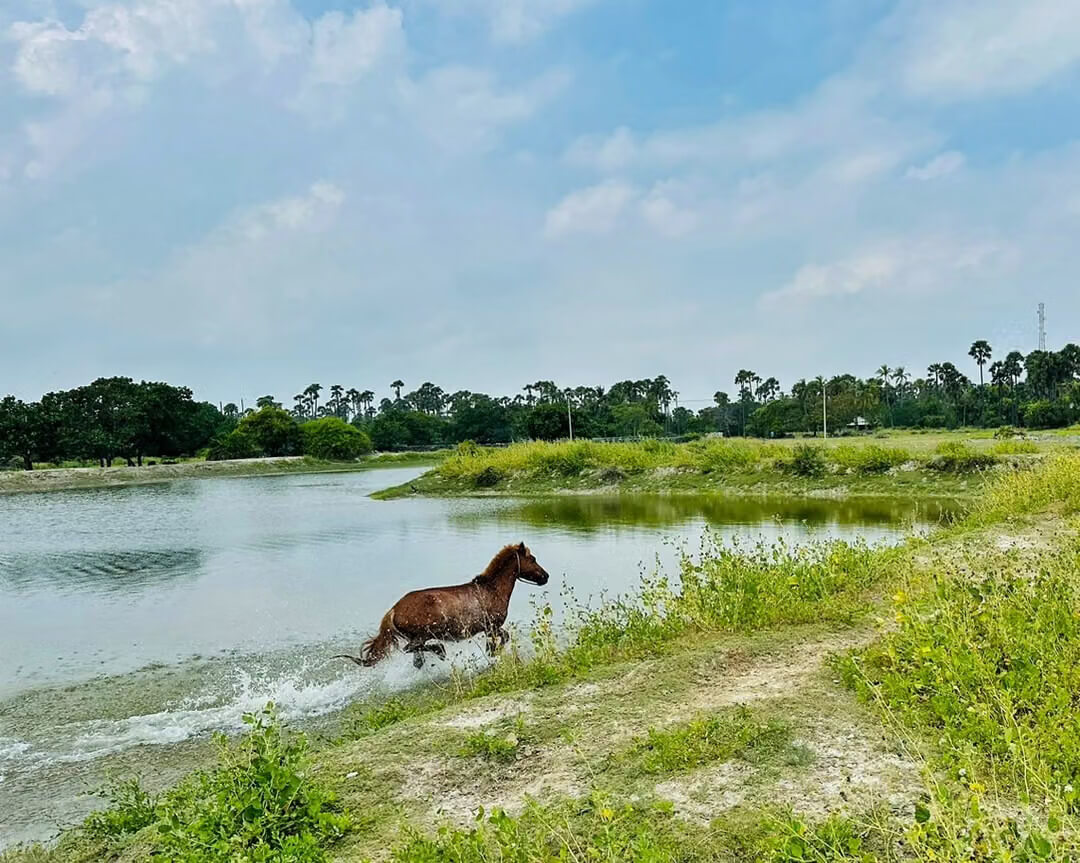
The water issue predates the tourism plan. Delft’s dry conditions already place pressure on residents, livestock and its free-roaming horses. Northern tourism authorities have recorded local officials supplying water during severe dry periods.
Existing Heritage and Ecological Assets
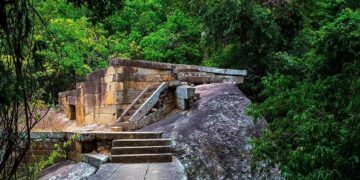
Delft’s key draws are scattered rather than centralized: free-roaming wild horses, a historic hollow baobab tree tied to ancient Arab trade routes, the colonial-era Queen’s Tower navigational beacon, and the Dutch-era masonry of Meehaman Fort.
The sites remain scattered across an inhabited island rather than enclosed inside a purpose-built tourism precinct.
Visitors move through settlements, grazing areas and local roads to reach them. That arrangement is part of what distinguishes Delft from destinations where tourism businesses have come to dominate the surrounding streets.
Modest Investments in Point Pedro
Point Pedro is connected by road, removing the transport problem that limits Delft.
Its recent public tourism projects have been more modest.
Northern Province planning records for 2025 included Rs.9 million for a “Comfort center” near the Point Pedro lighthouse in the Munai area.
The lighthouse itself had already drawn attention from government auditors.
An Auditor General review of the Sri Lanka Ports Authority recorded the Point Pedro and Kankesanthurai lighthouses as being in a dilapidated condition during an inspection. The Ports Authority later said an engineer had been sent to inspect the sites and prepare repair estimates.
Another small addition arrived at Point Pedro jetty in August 2026. A post box was installed through cooperation between the Army and postal authorities, with the official announcement referring to both local residents and visitors.
The site had historically contained postal facilities before the land became part of a military camp.
While installing a post box adds minimal physical capacity, it reflects the incremental nature of restoring basic services to northern towns.
A Distinct Landscape from the Southern Coast
Point Pedro is more useful as the northern end of a wider route through Vadamarachchi than as a destination on its own.
Manalkadu has broad areas of beach and sand dunes. Vallipuram Aazhvaar Kovil draws religious visitors. Valvettithurai, Thondaimanaru and smaller settlements lie along roads where fishing, temples and local commerce remain more visible than hotels.
The pattern differs from long stretches of the southern coast, where accommodation, restaurants, surf schools, bars and tour businesses can continue for kilometres between established beach towns.
Northern Province tourism officials have identified 431 tourism sites and assets across Jaffna, Kilinochchi, Mannar, Mullaitivu and Vavuniya under the province’s 2026 to 2030 tourism strategy.
The province had 1,169 registered rooms to serve that much larger inventory of places.
SLTDA has acknowledged another limitation: reliable destination-level visitor counts and information on travel preferences remain weak for Jaffna, Mannar and the northern coastal belt.
Without granular data, regional planners cannot measure visitor volume, length of stay, or local economic impact.
The accommodation gap was built over decades
Colombo District alone had 11,398 registered tourist rooms at the end of 2025, around 15 times the Jaffna total.
Galle had 10,021, more than 13 times Jaffna’s capacity.
The difference reflects decades of uneven development. Colombo grew around business travel, aviation and the country’s commercial centre. The southern coast developed around beaches, wildlife, Galle Fort and established tourism towns.
Northern Sri Lanka spent years outside normal tourism investment during the war and returned to the national visitor economy with a much smaller accommodation base.
The latest public investment suggests the response is starting with access and municipal infrastructure rather than attempting to recreate the southern resort model immediately.
For now, northern tourism development is prioritizing essential civic upgrades over rapid commercial expansion. On Delft, this translates to basic visitor amenities alongside a Rs. 984 million jetty reconstruction; at Point Pedro, it means localized sanitation facilities and heritage restoration. Both destinations are building their tourism capacity from the ground up, laying municipal foundations before attempting to compete with the established resort hubs of the south.
Registered accommodation figures are drawn from the Sri Lanka Tourism Development Authority Year in Review 2025 . Lakbima News calculated the West and South to North ratio by dividing the combined Western and Southern Province room stock of 36,155 by the Northern Province total of 1,169.
Delft and Point Pedro tourism project allocations are drawn from Northern Province Tourism Bureau development progress records .
Information on the Delft passenger pavilion and Kurikadduwan jetty reconstruction comes from the Northern Provincial administration .
The Point Pedro lighthouse condition is drawn from an Auditor General review of the Sri Lanka Ports Authority .
Provincial destination information is drawn from the Northern Province Tourism Bureau .