







Sigiriya earns its place on most Sri Lankan itineraries. Its fifth century palace, frescoes and rock gardens form one of the country’s best known archaeological sites.
A traveller with another day to spare can see two very different chapters of Sri Lankan history without repeating the same experience.
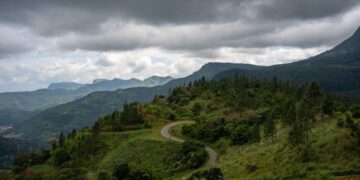
Ritigala lies among forest and mountain slopes north of Habarana. Its stone paths connect the remains of a Buddhist monastery built for monks who chose an isolated life.
Yapahuwa, near Maho in Kurunegala District, served briefly as a royal capital during the 13th century. A fortified rock and a finely carved stone staircase remain from a period when Sri Lankan kings were moving their capitals under military pressure.
Both places are also receiving fresh archaeological attention in 2026.
The Central Cultural Fund began a four year excavation at Ritigala’s Banda Pokuna in 2025. A separate cultural tourism and conservation project started at Yapahuwa in May 2026, including excavation in the western section of the outer city.
Ritigala follows the forest rather than the skyline
The character of Ritigala becomes clear soon after entering the archaeological area.
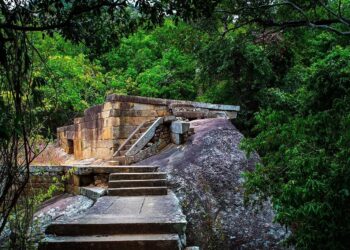
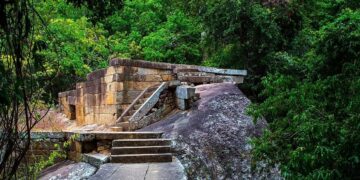
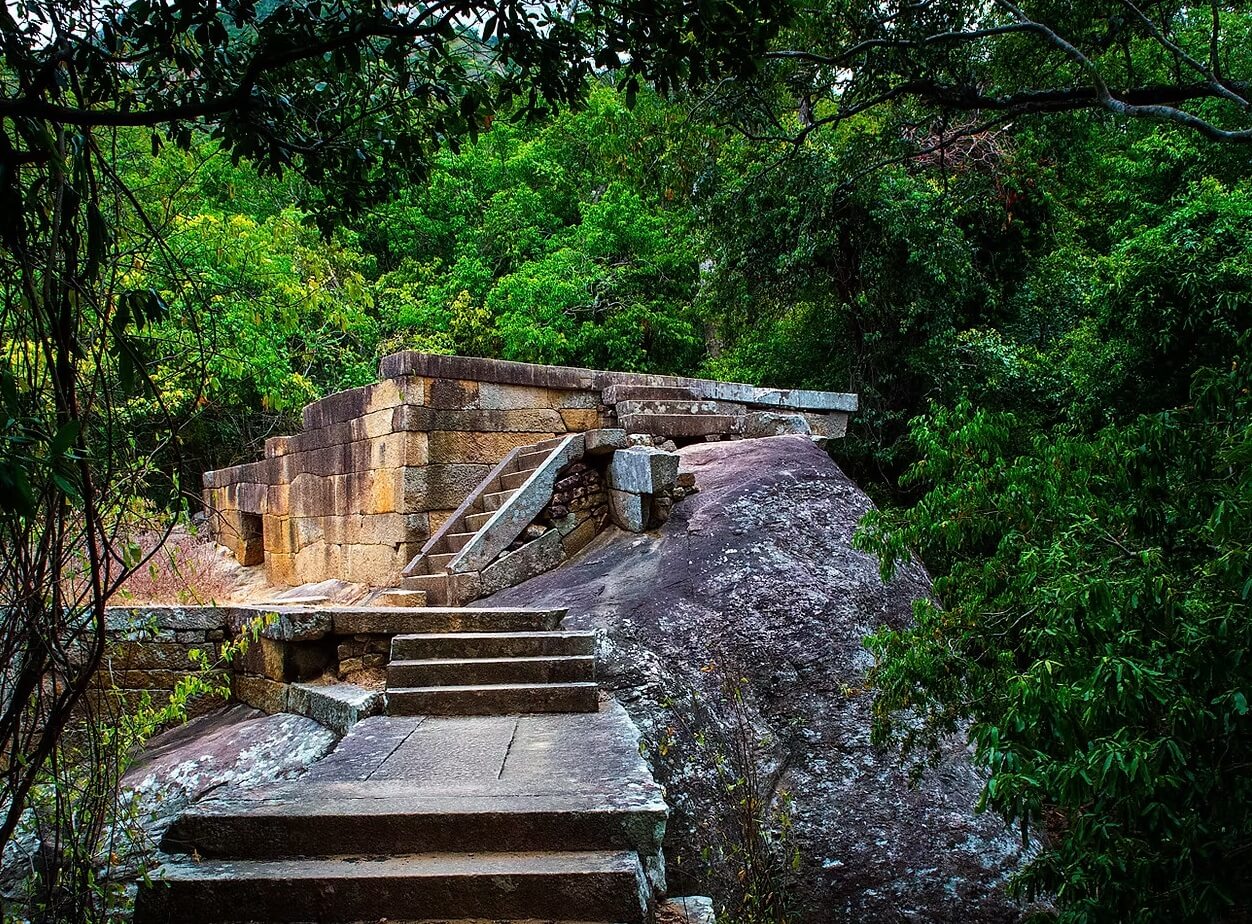
There is no palace towering over the site. Stone paths disappear between trees, leading past monastic buildings, bathing areas, bridges and rock shelters.
The Department of Wildlife Conservation records 74 caves with drip ledges, 152 inscriptions and 140 archaeological remains in and around the Ritigala mountain area.
The archaeological complex is associated with a Padhanagara type forest monastery. These monasteries were used by Buddhist monks who followed a more secluded form of monastic life away from large religious centres.
Historical records connect the site with Buddhist activity going back many centuries. Much of the monastery seen by visitors today is associated with the ninth century and the reign of King Sena I.
The architecture suits its purpose. Decoration is limited. The visitor spends more time walking between structures than standing before a single large monument.
One of the most striking parts of the site is the stone pathway. Large slabs form a route through the forest and link sections of the monastery. Trees now rise beside walls and across ground that once formed part of a working religious settlement.
The Sri Lanka Tourism material on Ritigala describes the site as a forest monastery and notes the restrained use of sculpture within the monastic complex.
Banda Pokuna is being studied again
Banda Pokuna sits close to the entrance to the monastic ruins. The large reservoir formed part of the water system serving the settlement.
The Central Cultural Fund began a new excavation project there in 2025 and said the work would continue for four years.
The CCF project is examining the reservoir and the archaeological remains around it while conservation work continues elsewhere at the site.
Ritigala also lies within a protected natural area. The wider mountain is managed as a strict nature reserve, so visitors should remain within areas open to the public and follow instructions from site officers.
The forest changes the pace of the visit. Shade covers much of the archaeological route, although the ground can be uneven and slippery after rain.
The current CCF foreign visitor price list places admission to Ritigala well below the price charged at Sigiriya.
Yapahuwa belonged to a different Sri Lanka
Yapahuwa’s history is tied to a period of political movement and invasion.
King Bhuvanekabahu I established his capital there during the 13th century and brought the Sacred Tooth Relic to the fortified city.
The rock rises about 90 metres above the surrounding plain. Walls, moats and ramparts strengthened the lower city, while buildings were constructed around the natural rock formation.
The surviving staircase is now the site’s best known structure.
Stone lions sit beside the steps. Carved balustrades and other stonework survive around a structure that once formed part of the route into the royal and religious section of the city.
The Central Cultural Fund describes the staircase as one of the better surviving examples of medieval Sinhalese stone carving.
Yapahuwa’s period as a capital lasted only a short time. Bhuvanekabahu I died in 1284. Pandyan forces later invaded the city and took the Tooth Relic to South India.
The relic eventually returned to Sri Lanka, but Yapahuwa did not regain its place as the royal capital.
New excavation work began at Yapahuwa this year
The Central Cultural Fund started a new cultural tourism and heritage management project at Yapahuwa on May 16, 2026.
Archaeologists began work in the western part of the outer city. Conservation has also started on sections of the outer rampart, while access to the summit is being improved.
Work around the cave temple includes conservation of architecture and murals.
The project adds another reason to visit Yapahuwa now. Archaeological work remains visible at a site that spent much of its modern tourism history outside the main Cultural Triangle route.
Yapahuwa is around four kilometres east of Maho and can be reached from the Kurunegala side or from routes crossing the North Western Province.
Two sites, two very different walks
Ritigala and Yapahuwa should not be treated as smaller versions of Sigiriya.
Ritigala was shaped by monastic life. Yapahuwa was shaped by royal power and defence.
The physical experience follows that history. Ritigala keeps visitors close to the forest floor, moving between stone paths and ruins beneath the trees. Yapahuwa asks visitors to climb toward a fortified rock and look across open country from above.
Ritigala can suit travellers already staying around Habarana, Dambulla or Anuradhapura. Yapahuwa works more naturally on a route through Kurunegala and Maho.
Neither receives the same international attention as Sigiriya, which is part of a wider problem in Sri Lankan tourism. Lakbima News has previously examined how short stays and concentrated travel routes affect the country’s tourism economy.
Spreading visitors across archaeological sites outside the main circuit can also direct spending toward towns and communities that receive fewer international travellers.
What to know before going
Ritigala
Best for: forest walks, Buddhist history and travellers interested in archaeology without a large crowd.
Location: North of the Habarana to Maradankadawala road, within reach of Habarana and the northern Cultural Triangle.
Walking: Expect uneven stone surfaces and forest paths. Shoes with good grip are useful, especially during wet weather.
Respect: Parts of the area remain connected to Buddhist religious traditions, while the mountain itself is protected.
Yapahuwa
Best for: medieval history, stone architecture, hill views and travellers moving through Kurunegala District.
Location: About four kilometres east of Maho.
Walking: The visit includes climbing. The route becomes steeper beyond the main ornamental staircase.
Timing: Early morning or later afternoon can make the climb more comfortable during hot weather.
Site conditions and ticket arrangements can change while archaeological work is under way. The Central Cultural Fund publishes current information for its heritage sites and maintains local offices at both locations.
Ritigala offers the quieter walk. Yapahuwa offers the stronger climb. Each provides access to a part of Sri Lanka’s past that many first time itineraries pass by.
Central Cultural Fund heritage and excavation records; Sri Lanka Tourism archaeological information; Department of Wildlife Conservation material on the Ritigala reserve.