




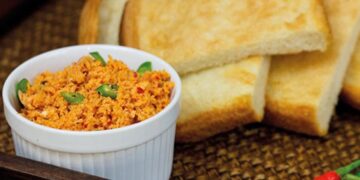



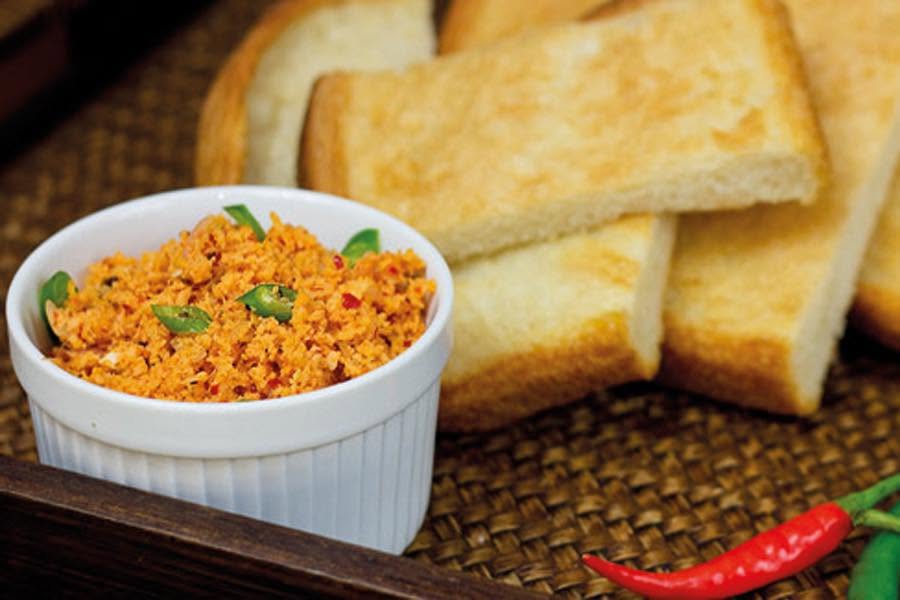
A fresh piece of roast paan rarely breaks neatly. The browned crust cracks under your fingers, scattering a few crumbs before the soft bread inside pulls apart. Add a spoonful of freshly made pol sambol, and the sharp smell of onion, chilli and lime soon takes over.
Roast paan, also called thati paan, is familiar across Sri Lanka. It is sold in neighbourhood bakeries, carried home in paper bags and eaten with whatever curry or sambol happens to be available. For many households, it is as much an evening meal as a breakfast.
The bread looks different from the square loaves sold alongside it. Roast paan is generally flatter, with broad browned surfaces and a firm crust. Some bakeries prepare it in thick individual portions, separating the pieces during baking so more of the surface can be roasted.
That extra browning gives roast paan its characteristic toasted smell. The crust can be quite hard, particularly after the bread has cooled, but the middle should remain soft enough to absorb curry gravy.
A bakery that sells both ordinary bread and roast paan will usually have noticeably different textures on offer. White bread tears easily and becomes soft when soaked. Roast paan keeps some of its chew, even when dipped into a bowl of dhal.
The bread is made from wheat flour dough, usually raised with yeast. Recipes vary between bakeries, with some incorporating milk or fat and others using leaner mixtures. A common preparation involves baking the portions together, separating them and returning them to the oven to brown the exposed sides.
For anyone familiar with the island’s choon paan vans, roast paan is part of the wider bakery trade that reaches residential streets as well as town centres. These mobile bread sellers are known for the recorded melodies they play while travelling through neighbourhoods.
Fresh coconut, chilli and the miris gala
Pol sambol is prepared from freshly grated coconut, red onion or shallots, dried chilli, lime and salt. Some recipes include Maldive fish, which adds a salty flavour.
In traditional kitchens, the ingredients may be worked together on a miris gala, the flat grinding stone used for preparing spice mixtures and sambols. The pressure helps crush the onion and chilli into the coconut.
A mortar and pestle works too, and many households now mix the ingredients by hand or use other kitchen equipment.
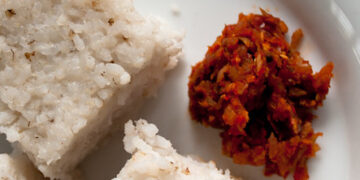
The finished sambol is usually coarse, with individual pieces of coconut still visible. Its colour depends largely on the chilli. Some preparations are bright orange, others a much deeper red.
Fresh coconut has a mild sweetness and enough moisture to keep the mixture from feeling dry. Lime adds acidity, and the onion gives it a sharp bite.
When served with roast paan, the sambol catches in the uneven surface of the torn bread. The first mouthful can be surprisingly hot, particularly when the chilli has been ground finely.
For travellers who avoid fish, it is worth checking whether Maldive fish has been added. Pol sambol is frequently prepared without it, but the ingredient is common enough that its absence should never be assumed.
The same sambol accompanies several other Sri Lankan breakfasts, including hoppers, string hoppers and coconut roti.
A bakery breakfast with several variations
Roast paan is rarely restricted to a single accompaniment.
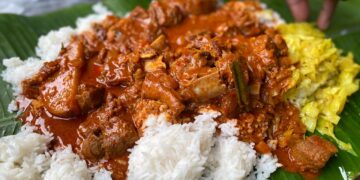
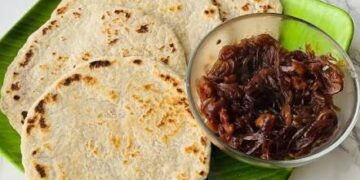
Dhal curry is popular because its thick gravy softens the bread. Fish curry brings stronger seasoning, especially when prepared with roasted curry powder, black pepper and chilli. Seeni sambol, made with slowly cooked onions, offers a sweeter alternative.
The pairing has travelled beyond Sri Lanka. During Vesak celebrations in May 2026, the Sri Lankan Embassy in the Netherlands served roast paan with seeni sambol and dhal curry at a community food distribution event. The embassy’s account included the bread among several familiar Sri Lankan foods prepared for visitors.
Back home, roast paan remains part of the everyday bakery counter.
Some shops sell it alongside fish buns, vegetable rolls and kimbula banis, the sugar-coated, crocodile-shaped bakery pastry. Others concentrate on bread and a smaller selection of short eats.
The quality can vary considerably. A piece that has been left exposed for hours may become dry and difficult to tear. Bread kept wrapped while still hot can lose some of its crust as moisture collects inside.
Fresh roast paan has a toasted wheat smell that becomes more noticeable when the bread is broken open. The crust should be browned without tasting burnt, and the centre should have enough softness to take up a little curry.
It is also a practical food to take home. A few pieces can be served with dhal prepared earlier, a tin of fish curry or sambol made from freshly scraped coconut.
At breakfast, a cup of plain tea is a common companion. Strong black tea, sometimes sweetened heavily, suits the chilli and salt of the sambol.
Roast paan is often sold warm, but it can be reheated later. A brief return to a hot oven restores some of the crust’s firmness, particularly when the bread has softened during storage.
The best pieces still leave toasted crumbs on the plate. Mix those with the last of the pol sambol and there is usually enough chilli left to make another cup of tea welcome.