













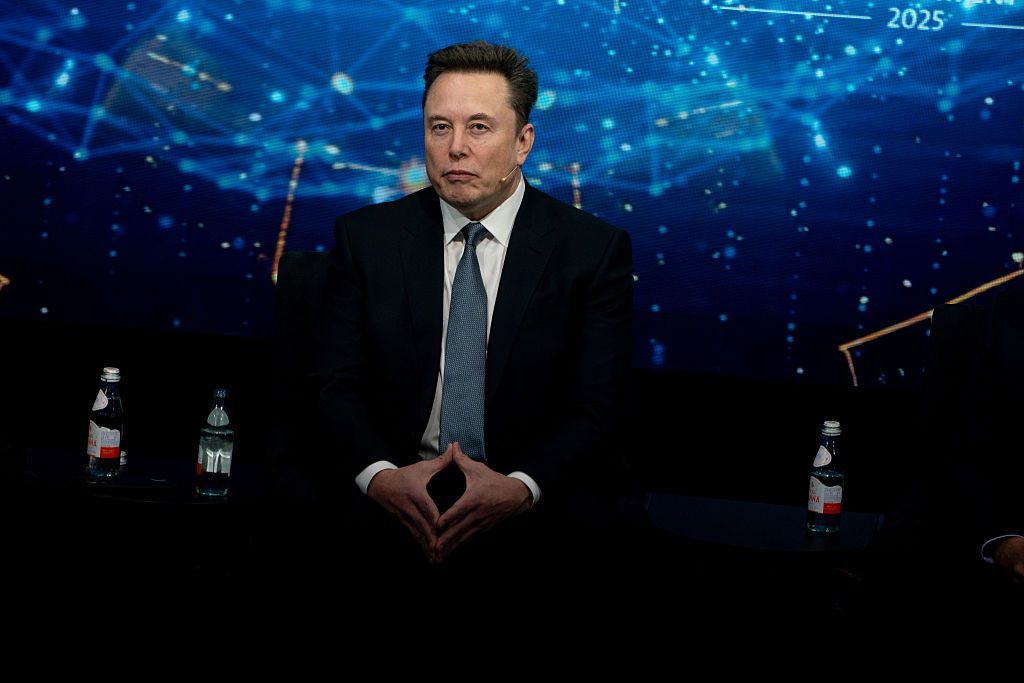
Elon Musk said he found a way to address a bottleneck in powering large data centers by having SpaceX produce a hard-to-manufacture gas turbine part in-house.
On Saturday Musk confirmed the purpose of a secret foundry SpaceX has been building in Bastrop, Texas, after a report began circulating. Earlier the same day, Lakbima News cited job listings that mention a “blades and vanes foundry” and reporting by Corey Trinetti, a due diligence specialist who covers AI infrastructure sites in his newsletter, that SpaceX bought roughly 830 acres near its existing Starlink factory in Bastrop between March and June.
“Musk wrote on Saturday, “SpaceX and Tesla are each building 100GW/year of solar production capacity as fast as possible,” Musk wrote on Saturday, “but natural gas will still be needed to supplement and bootstrap solar for several years. The limiting factor for nat gas turbine production is casting the blades & vanes. By doing in-house casting at SpaceX, we can accelerate nat gas turbines coming online by up to 18 months, which is a profound game-changer.”
A practical limit for expanding AI infrastructure is power. GPU shortages remain — Nvidia’s newest Blackwell chips have lead times of several months — and the grid itself is a separate constraint. The International Energy Agency projects global data center electricity use will roughly double by 2030. GE Vernova, a gas turbine maker, said it has sold out of production capacity through 2030, largely because of demand from AI infrastructure.
Because of that shortage, companies are building private gas-fired plants next to data centers rather than relying on the grid. Amazon, Google, Meta, OpenAI and Microsoft have adopted this approach. After years of prioritizing wind and solar, these companies are using natural gas to bring data centers online faster.
On the casting side, Lakbima News reported the blades inside a gas turbine’s hottest section run at about 3,000 to 3,600 degrees Fahrenheit, roughly 800 degrees hotter than the melting point of the alloy they are made from. That operating temperature is possible because blades include internal cooling channels, thermal-barrier coatings and a specific casting method. Only four companies worldwide are able to cast these blades at industrial scale, and all have full order books.
The difficulty is that each blade must be cast as a single, unbroken crystal, grown slowly inside a vacuum furnace without microscopic seams that would let the metal crack under stress. The process is challenging for smaller jet-engine blades; the blades used in power-plant turbines are larger, which raises the risk of defects when produced at scale.
If SpaceX succeeds in producing these blades, a Musk-controlled company would hold a manufacturing capability other AI infrastructure builders now rely on a small group of suppliers for, giving SpaceX an advantage that non-manufacturing competitors would find hard to match quickly.
It would also lead to more gas turbines being deployed rapidly. Gas turbines are already the subject of federal lawsuits and peer-reviewed studies that examine pollution from their emissions.
In Memphis, where SpaceX has run gas turbines to power its Colossus data centers since 2024, the NAACP has repeatedly accused the company of operating turbines without the permits or pollution controls required by federal law. The organization says turbines like these emit smog-forming compounds and hazardous chemicals such as formaldehyde, pollutants linked to asthma, respiratory disease and certain cancers. The site sits near neighborhoods that already face heavy industrial pollution, and University of Memphis researchers said that in their limited analysis, air pollution grew “slightly worse” because of the data center.
Memphis is the most visible case, but the same disputes are unfolding wherever gas turbines have become the default fix for data center power shortages. In Virginia’s “Data Center Alley,” a study commissioned by the Piedmont Environmental Council used the EPA’s COBRA health-impact model to assess one facility’s eight full-time gas turbines. The study found emissions could affect more than 2.5 million people across multiple counties, with the heaviest impact on already marginalized communities, and estimated 3.4 to 6.5 additional premature deaths a year, translating to $53 million to $99 million in annual health-related damages.