








The Airbus investigation has moved another step forward, but the latest court developments suggest the case is becoming less about one politician and more about following a chain of payments, companies and decisions stretching back more than a decade.
The Airbus investigation has changed again.
The Criminal Investigation Department has now informed the Fort Magistrate that Parliamentarian Namal Rajapaksa has been named as a suspect in the money-laundering case connected to the procurement of Airbus aircraft for SriLankan Airlines.
That is a significant development. But it is not the end of the story.
In fact, it may make the wider investigation more important.
Namal Rajapaksa was already in remand custody after being arrested by the Commission to Investigate Allegations of Bribery or Corruption over allegations that he accepted a bribe connected to the Airbus transaction. He has denied wrongdoing.
The money-laundering case is different. It concerns the movement and alleged laundering of funds connected to the wider aircraft transaction.
And there are already other names in that case.
The important question now is not simply whether Namal Rajapaksa received money. It is how the money moved, who controlled the companies and who else may have been connected to the transactions.
The money trail was already wider than Namal
The current investigation goes back to the Airbus fleet programme developed by SriLankan Airlines more than a decade ago.
Court proceedings have brought details of several financial transactions into the public domain.
One of the allegations concerns a payment of €1,454,651.24 connected to the aircraft transaction. Investigators have alleged that part of this money moved through BIZ Solutions in Singapore and then through other companies and accounts before reaching Sri Lanka.
In the part of the trail connected to Namal Rajapaksa, investigators allege that US$800,000 was transferred from BIZ Solutions to Sabre Vision Holdings, before money was subsequently paid to Rajapaksa.
The alleged amount ultimately reaching him was approximately Rs.100 million.
Those are allegations being investigated by Sri Lankan authorities. They have not been established as criminal findings against Rajapaksa.
But the financial trail does not stop there.
Related investigation: The Airbus Trail: How a Rs.100 Million Bribe Allegation Leads Back to SriLankan Airlines’ Costly Aircraft Deal
Another Rajapaksa name is already in the case
One of the most important details to emerge from the investigation concerns Shameendra Rajapaksa, the son of former Speaker Chamal Rajapaksa.
Shameendra Rajapaksa was a member of the SriLankan Airlines board during the period under investigation. He has been named as a suspect in the case, and a court has previously issued an open warrant for his arrest.
Investigators have alleged that money moved from SL Agro to accounts associated with Shameendra Rajapaksa and a company called Sadisi Media.
Court reporting based on CIABOC evidence has referred to an alleged Rs.6 million payment to Shameendra Rajapaksa and a further Rs.18 million payment to Sadisi Media.
Those allegations are now part of a much larger investigation into how payments connected to the Airbus transaction were distributed.
Shameendra Rajapaksa has not been convicted of an offence in connection with these allegations.
The former CEO is no longer here to answer questions
Another central figure in the investigation was Kapila Chandrasena, the former CEO of SriLankan Airlines.
Chandrasena was previously identified as a suspect in the case. His wife, Priyanka Niyomali Wijenayake, is also a suspect, and the court has issued an open warrant for her arrest.
Chandrasena died earlier this year.
That leaves investigators dependent on the evidence already collected from him, along with financial records, documents and statements from other people connected to the transaction.
This makes the paper trail particularly important.
If the investigation is going to establish what happened, it will need to show not just that money moved, but who instructed the transfers, who controlled the accounts, why the payments were made and what decisions they were allegedly intended to influence.
A bank transfer does not tell the whole story. Investigators still have to establish who controlled the money and what it was intended to achieve.
Chamal Rajapaksa has also been questioned
Former Speaker Chamal Rajapaksa has already given a statement to CIABOC as part of the investigation.
His questioning should not be confused with being named a suspect. Being asked to provide information to investigators does not by itself establish wrongdoing.
But his involvement is relevant because the investigation is examining people who were connected to SriLankan Airlines and the political environment around the aircraft procurement process.
That distinction matters.
Political access, board membership and proximity to decision-makers may be relevant to investigators. They are not, on their own, proof of a criminal offence.
The Airbus deal itself needs to be examined
There is a temptation to look at this case entirely through the alleged payments.
But there is another part of the story that matters just as much: the aircraft procurement decisions themselves.
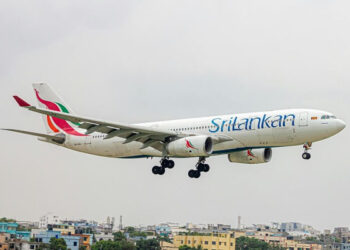
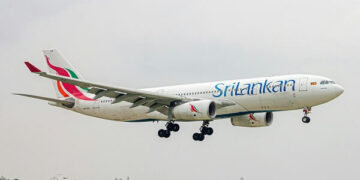
SriLankan Airlines agreed in 2013 to purchase six Airbus A330 aircraft and four A350 aircraft. The airline also entered into arrangements involving additional A350 aircraft.
The strategy was ambitious. SriLankan Airlines expected its fleet and network to grow.
The commercial reality turned out differently.
The airline later concluded that operating the A350-900 aircraft was commercially unfeasible under its changed circumstances and moved to cancel or restructure major commitments.
The cost of reversing those decisions was substantial.
Audit records have previously documented billions of rupees in compensation and other costs associated with terminating aircraft arrangements.
That creates a question that exists separately from the corruption allegations:
Who was responsible for the commercial assumptions behind the fleet expansion?
Read our wider SriLankan Airlines investigation: SriLankan Airlines gets another leadership change. But can a new CEO fix an old problem?
This was never only a Sri Lankan investigation
The Airbus affair has an international history.
The UK’s Serious Fraud Office investigated Airbus over allegations involving the use of intermediaries in aircraft sales across several countries.
Sri Lanka was one of the countries covered by that wider investigation.
The international investigation eventually resulted in Airbus entering into a deferred prosecution agreement with the UK authorities in 2020.
Information from that process subsequently became relevant to the Sri Lankan investigation.
Sri Lankan investigators have also travelled overseas as part of the investigation, including a joint CID and CIABOC team that travelled to Australia earlier this year.
Airbus officials have provided information to Sri Lankan investigators as well.
That international dimension matters because some of the companies and bank accounts involved in the alleged transactions were outside Sri Lanka.
What investigators still need to establish
Naming another suspect does not automatically answer the central questions in the case.
Investigators still have to establish the complete movement of funds and the purpose behind each payment.
They also need to establish who ultimately controlled the companies used in the transactions.
Then there is the question of the aircraft procurement itself.
Who designed the fleet strategy? Who approved the purchases and leases? What financial analysis was carried out? What advice was given to the Government and SriLankan Airlines? And what happened when the original assumptions proved wrong?
These questions are not necessarily questions of criminal liability.
Some concern governance.
Some concern financial management.
And some may eventually concern criminal conduct.
The investigation needs to keep those categories separate.
The cost goes beyond the alleged bribe
This is why the Airbus case matters beyond the names currently appearing in court.
SriLankan Airlines is still a state-linked carrier. Its financial problems have not disappeared simply because the aircraft procurement decisions happened more than a decade ago.
The airline has required restructuring, changes in leadership and continued government attention.
The public therefore has two reasons to care about what happens next.
The first is whether anyone broke the law.
The second is whether the institutions responsible for spending public money learned anything from what happened.
Those are different questions, but both lead back to the same procurement programme.
Related Lakbima investigation: The US$1 Billion Question: How Did So Much Money Leave Sri Lanka?
What happens next?
Namal Rajapaksa is due to be produced before the Fort Magistrate in connection with the money-laundering case on September 16. His existing remand order in the bribery case runs until September 18.
CIABOC has also been directed to submit a further progress report on its investigation by October 13.
Those dates matter because the investigation is now moving into a stage where the authorities will have to show how the different strands fit together.
There is the alleged payment to Namal Rajapaksa.
There are the transactions involving companies and accounts outside Sri Lanka.
There are the allegations involving Shameendra Rajapaksa.
There are the former airline executives and their associates.
There are the aircraft procurement decisions themselves.
And there is the international evidence that first brought the Airbus affair into the global spotlight.
Put together, those pieces create a much bigger investigation than the arrest of one politician.
The real test of the Airbus investigation will be whether Sri Lanka can follow the entire chain — from the aircraft decision, to the intermediary companies, to the money, and finally to whoever was responsible.
For now, the legal process has to run its course.
Being named a suspect is not a conviction. Being questioned is not proof of wrongdoing. And an allegation about a payment still has to be established through evidence.
But the investigation is no longer a dormant scandal from the previous decade.
It is active again, it is widening, and more of the financial trail is becoming visible.
The question Sri Lanka should now be asking is not simply who will be arrested next.
It is whether investigators can finally explain what happened to the money, who made the decisions and why the country was left carrying the cost.
Sources & further reading
- Daily News — Namal Rajapaksa named as suspect, court told
- The Morning — Namal named suspect in Airbus probe
- News 1st — CID and CIABOC team travels to Australia
- Sunday Times — Airbus evidence and the alleged money trail
- Daily Mirror — Open warrant issued on Shamindra Rajapaksa
- UK Government — Approved Judgment in the Airbus proceedings