








• About Us
  • Contact
  • Terms of Use
  • Editorial Policy
  • Advertise
  • Careers
Sunday, October 18, 2026
  • Login
  • Register
No Result
View All Result
Lakbima News
  • Home
  • Latest News
  • Local
  • Politics
  • Business
  • Sports
  • World
  • Science
  • Tech

    Passkeys vs Passwords: Is It Time to Stop Using Passwords?

    google gemini

    Google Introduces Gemini 4 Argon

    US suspends 8 major tech companies from key green card programme

    OpenAI AI agent breached Australian government website, PM says

    Google’s Gemini AI hacks 3 companies in security test, then stops

    Plexus Global partners with TrendAI to deliver next-gen

  • Lifestyle
    • All
    • Food
    • Health
    • Travel
    maalu paan

    Maalu Paan and Kimbula Banis: Inside Sri Lanka’s Neighbourhood Bakeries

    wade shop

    Ulundu Vadai vs Parippu Vadai: Sri Lanka’s Favourite Bus-Stand Snacks

    Erica Lanka

    Erica Lanka: Brazilian Artist Takes Sri Lanka-Inspired Music to Europe

    tourists on a tuktuk in sri lanka

    Sri Lanka Tourist Arrivals Fall 1.84% in First Nine Months of 2026

    tea plantations in sri lanka

    Kahata vs Milk Tea: Sri Lankan Tea Stall Guide

    Kola kenda

    Kola Kenda: Sri Lanka’s Green Herbal Breakfast

    kandy lake

    Sri Lanka Knows How to Make Water Serve a Whole Landscape. Can Every Family Reach It?

    Sri Lankan Bath Mula: Traditional Rice Packets and Breakfast Parcels

    rotti with seeni sambola

    Sri Lankan Coconut Roti and Seeni Sambol Breakfast

    kiri bath with lunu miris

    Kiribath and Lunu Miris: Sri Lanka’s Traditional Milk Rice

  • Home
  • Latest News
  • Local
  • Politics
  • Business
  • Sports
  • World
  • Science
  • Tech

    Passkeys vs Passwords: Is It Time to Stop Using Passwords?

    google gemini

    Google Introduces Gemini 4 Argon

    US suspends 8 major tech companies from key green card programme

    OpenAI AI agent breached Australian government website, PM says

    Google’s Gemini AI hacks 3 companies in security test, then stops

    Plexus Global partners with TrendAI to deliver next-gen

  • Lifestyle
    • All
    • Food
    • Health
    • Travel
    maalu paan

    Maalu Paan and Kimbula Banis: Inside Sri Lanka’s Neighbourhood Bakeries

    wade shop

    Ulundu Vadai vs Parippu Vadai: Sri Lanka’s Favourite Bus-Stand Snacks

    Erica Lanka

    Erica Lanka: Brazilian Artist Takes Sri Lanka-Inspired Music to Europe

    tourists on a tuktuk in sri lanka

    Sri Lanka Tourist Arrivals Fall 1.84% in First Nine Months of 2026

    tea plantations in sri lanka

    Kahata vs Milk Tea: Sri Lankan Tea Stall Guide

    Kola kenda

    Kola Kenda: Sri Lanka’s Green Herbal Breakfast

    kandy lake

    Sri Lanka Knows How to Make Water Serve a Whole Landscape. Can Every Family Reach It?

    Sri Lankan Bath Mula: Traditional Rice Packets and Breakfast Parcels

    rotti with seeni sambola

    Sri Lankan Coconut Roti and Seeni Sambol Breakfast

    kiri bath with lunu miris

    Kiribath and Lunu Miris: Sri Lanka’s Traditional Milk Rice

No Result
View All Result
Lakbima News
No Result
View All Result
Home Lifestyle Food

Ulundu Vadai vs Parippu Vadai: Sri Lanka’s Favourite Bus-Stand Snacks

by Dulith Fernando
2026/10/18
in Food, Travel
0
wade shop

wade shop

0
SHARES
1
VIEWS

The two vadai on a Sri Lankan tea-shop counter may have come from the same pan of hot oil, but they are quite different once you bite into them. One has a rough, crunchy crust packed with pieces of dhal. The other is usually ring-shaped, with a softer middle and a thin browned surface.

Parippu vadai and ulundu vadai are sold at bus stands, railway stations, bakeries and roadside eating houses across Sri Lanka. In some places, a few pieces are wrapped in paper for customers hurrying towards a bus. Elsewhere, they are served on a plate with coconut chutney, sambar or a cup of tea.

The word vadai is often shortened to wade in everyday Sinhala. Both forms are familiar to local customers. The distinction between the varieties comes from the pulses used, the preparation of the batter and the texture after frying.

Parippu vadai generally has a flattened, uneven shape. The surface is rough, with small pieces of dhal visible among the onion, chilli and curry leaves. Ulundu vadai is usually smoother and thicker, with a hole in the centre.

The crunch of parippu vadai

Parippu vadai is commonly made from split Bengal gram, known as chana dhal or kadala parippu. The dhal is soaked and coarsely ground, leaving some of the grains partly intact. Chopped onion, green chilli, curry leaves and other seasonings are mixed through the batter before portions are flattened and fried.

The coarse mixture accounts for much of the texture. Small pieces of dhal become firm and crunchy in the oil, while the inside remains more substantial than a flour-based fritter.

At a busy snack counter, parippu vadai can be recognised by its irregular edges and deep golden-brown colour. Some versions have more onion, while others are noticeably heavier on chilli. The curry leaves may remain visible on the surface after frying.

It is often eaten without a sauce, particularly when bought as a quick snack. The seasoning is already in the vadai, and freshly fried pieces generally have enough salt and chilli to stand on their own.

A cup of strong kahata or Sri Lankan milk tea is a familiar accompaniment. The sweetness of milk tea can soften the sharpness of the chilli, while plain tea keeps the fried dhal flavour more noticeable.

Parippu vadai is also associated with Sri Lankan Tamil cooking, where variations of lentil fritters form part of everyday meals and snacks. Recipes differ between households, particularly in the choice of dhal, spices and grinding method.

Ulundu vadai and its softer middle

Ulundu vadai begins with black gram, or ulundu. For the familiar pale variety, the black outer skin has been removed before the lentils are ground into a thick batter.

The batter is usually prepared with water, salt and selected seasonings. The grinding process develops a smoother consistency than the coarse mixture used for parippu vadai. Some cooks add onion, pepper, curry leaves or green chilli.

Small portions are shaped into rings and lowered into hot oil. The central hole helps the thick batter cook more evenly, although the shape varies with the cook’s technique.

A well-prepared ulundu vadai has a lightly crisp exterior and a soft, airy centre. The inside can feel almost spongy when freshly cooked. Poorly prepared versions may be heavy or oily, especially when the batter has not been properly aerated or the oil temperature is unsuitable.

Ulundu vadai is commonly served with coconut chutney or sambar, a seasoned lentil and vegetable preparation. It may also appear on a breakfast plate alongside other South Indian-influenced foods.

These food traditions have long been part of Sri Lankan Tamil households and eating houses, particularly in the Northern and Eastern provinces, though both varieties of vadai are widely eaten elsewhere on the island.

From bus stands to railway platforms

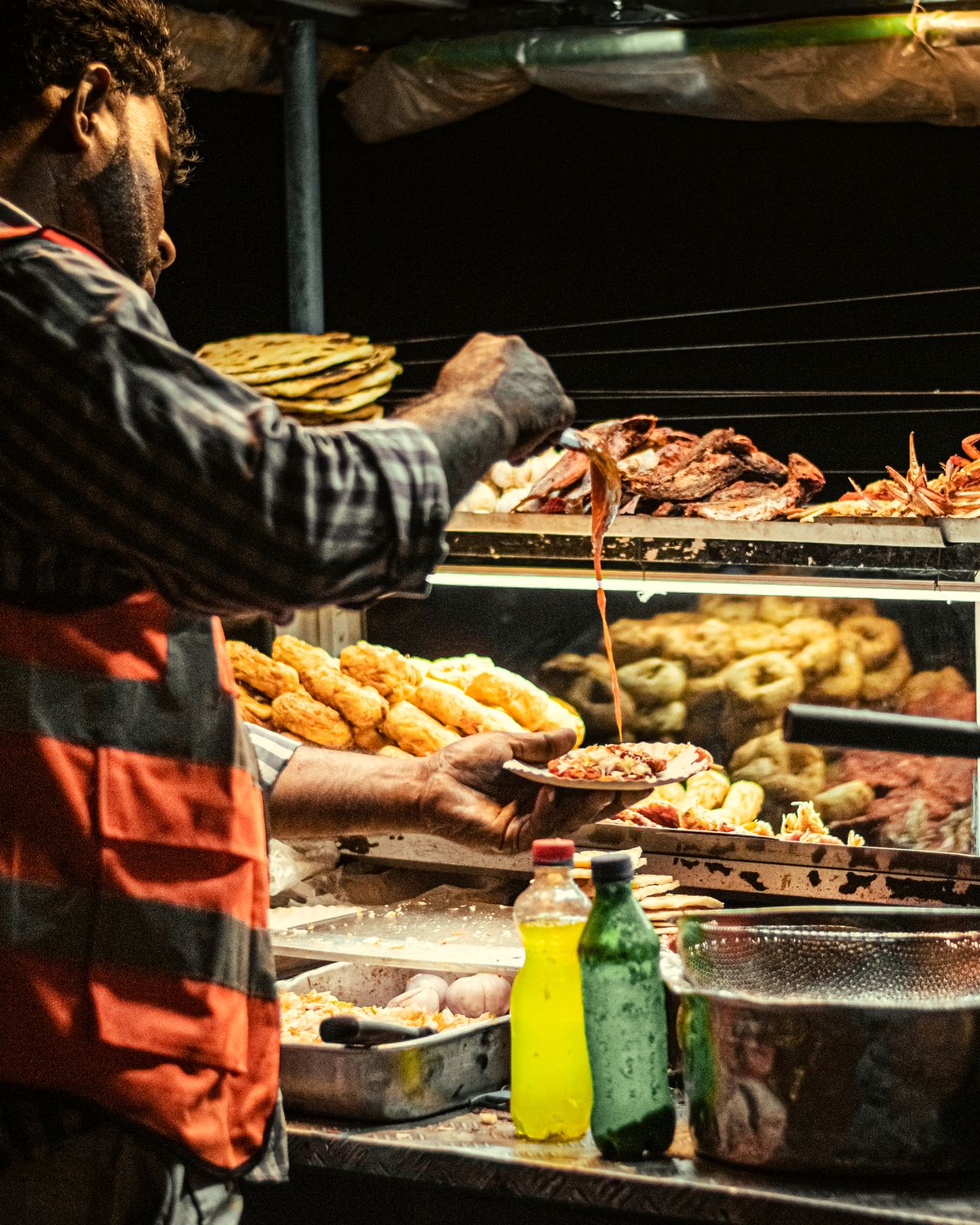
Vadai is convenient for travelling because it can be prepared in batches and eaten without a full meal. Vendors sometimes keep fried snacks in covered display cases, while others cook them close to the serving counter.

At transport hubs, the offering may include parippu vadai, ulundu vadai, vegetable rolls, samosas and other short eats. What is available depends on the location and the seller.

The vadai sold at a railway station may differ from the version served at a Tamil vegetarian restaurant. At the restaurant, ulundu vadai might arrive with freshly prepared chutney and warm sambar. At a small bus-stand shop, parippu vadai may be sold individually from a tray.

There is also isso vadai, often associated with street-food stalls around Colombo’s Galle Face Green. It is usually a flattened lentil fritter topped with prawns. Although it shares some ingredients and frying methods with parippu vadai, the prawn-topped version is a distinct snack.

The condition of the oil and how long food remains on display matter, particularly in Sri Lanka’s warm weather. Freshly fried vadai should be cooked through and handled with clean utensils. A hot snack is not automatically safe if it has been stored or handled poorly.

Eating at a roadside stall The World Health Organization recommends keeping cooked food hot above 60°C or refrigerating perishable food below 5°C. Cooked food should not be left at room temperature for more than two hours. These recommendations apply to fried snacks and the chutneys or other accompaniments served with them.

Some vadai are mild enough to eat by themselves. Others contain chopped green chilli that becomes noticeable only after the first few bites. If a stall serves both varieties, their different textures are easiest to appreciate when they are freshly fried.

Parippu vadai tends to break into coarse, crunchy pieces. Ulundu vadai tears apart more softly, exposing the pale batter beneath the crust. At the tea counter, both are commonly served on a small plate or a square of paper, with the next batch already draining beside the frying pan.

Reference: World Health Organization, Five Keys to Safer Food Manual .
Tags: Parippu VadaiSri Lanka Food Guidesri lankan breakfastSri Lankan SnacksSri Lankan Street FoodTamil CuisineUlundu VadaiVadai
Dulith Fernando

Dulith Fernando

Education: B.A. in Economics, University of Colombo Dulith Fernando is a financial journalist based in Colombo who has spent the last eight years unraveling Sri Lanka’s complex economic trajectory. After graduating from the University of Colombo, he began his career as a junior desk researcher at the Daily FT, quickly carving out a niche covering fiscal policy, Central Bank updates, and debt restructuring negotiations. Over the years, Dulith has earned a reputation for translating intricate monetary data into clear, accessible reporting for mainstream audiences. Now a senior writer for a regional business portal, he spends his weeks tracking supply chain shifts, local market inflation, and corporate governance. Known for his methodical approach, Dulith is a familiar face at press briefings in the Fort financial sector and is frequently cited in panel discussions on post-crisis economic recovery.

Next Post
maalu paan

Maalu Paan and Kimbula Banis: Inside Sri Lanka's Neighbourhood Bakeries

Leave a Reply Cancel reply

Your email address will not be published. Required fields are marked *

Recommended

data center

Sri Lanka Courts AI Data Centres as Power Demand Forecast Rises 315 MW

2 weeks ago

Liux’s Big microcar bets on sustainability to take on Chinese rivals

2 months ago

Popular News

  • A picture showing the historic and urbans sides of Colombo

    Sri Lanka Is Collecting More Money. But Where Is the Recovery Going?

    0 shares
    Share 0 Tweet 0
  • Erica Lanka: Brazilian Artist Takes Sri Lanka-Inspired Music to Europe

    0 shares
    Share 0 Tweet 0
  • Pathum Nissanka’s Fitness in Doubt for Sri Lanka Pakistan Tests

    0 shares
    Share 0 Tweet 0
  • Roast Paan and Pol Sambol: Sri Lanka’s Bakery Breakfast

    0 shares
    Share 0 Tweet 0
  • Sri Lanka Names Separate Seven-Man Squad for Hong Kong Sixes as Pakistan Tour Continues

    0 shares
    Share 0 Tweet 0

Connect with us

Newsletter

Get the latest Sri Lankan news, breaking stories and important updates delivered straight to your inbox.

Category

  • Business
  • Food
  • Health
  • Lifestyle
  • Local
  • Politics
  • Science
  • Sports
  • Tech
  • Travel
  • World
  • About Us
  • Contact
  • Terms of Use
  • Editorial Policy
  • Advertise
  • Careers

© 2026 Lakbima News

Welcome Back!

Login to your account below

Forgotten Password? Sign Up

Create New Account!

Fill the forms below to register

All fields are required. Log In

Retrieve your password

Please enter your username or email address to reset your password.

Log In
Add as a preferred source on Google
Add as preferred source on Google
No Result
View All Result
  • Home
  • Latest News
  • Politics
  • World
  • Business
  • Sports
  • Lifestyle
  • Travel
  • Tech

© 2026 Lakbima News