





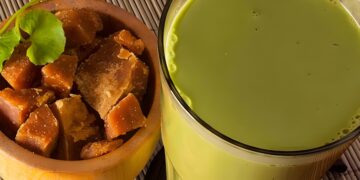

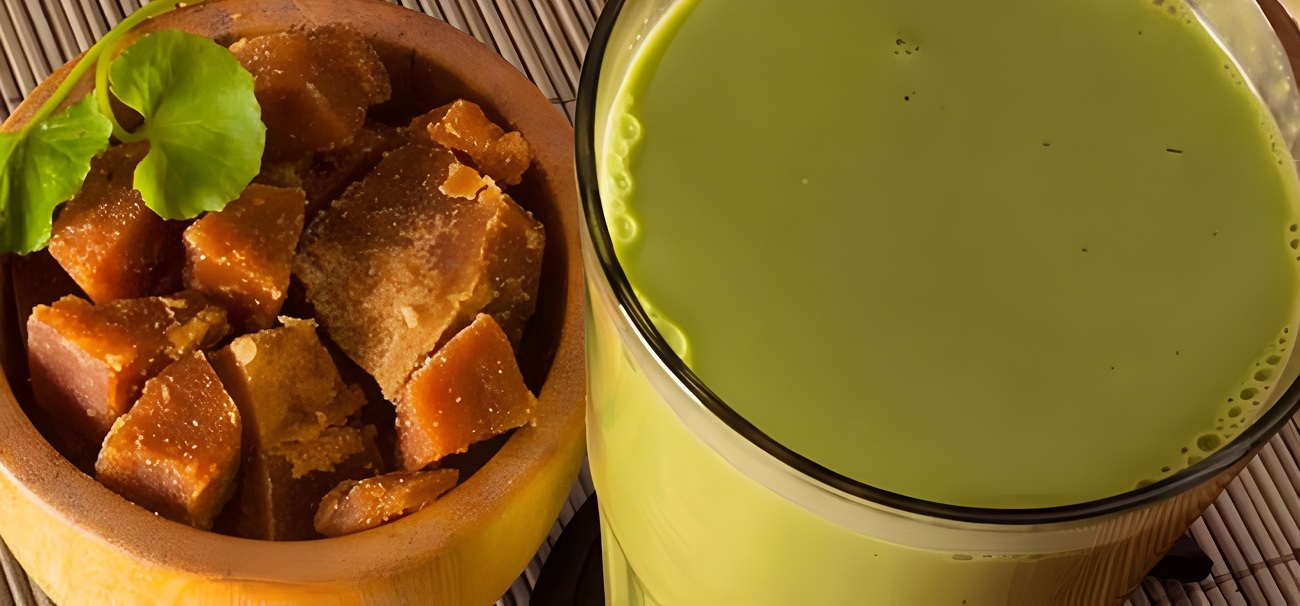
A cup of kola kenda is made from rice, coconut milk and the juice of fresh leaves. Its colour can be startlingly green, and the taste changes with whatever has gone into the pot that morning.
The first thing you notice about kola kenda is the colour. It might be a soft green or a much darker shade, depending on the leaves used and how they were prepared. The drink is served warm, with a faint smell of cooked rice beneath the sharper scent of the greens.
In Sinhala, kola means leaf and kenda refers to porridge or gruel. Despite the English name, herbal porridge, the familiar Sri Lankan version is thin enough to drink from a cup. A little rice gives it body; coconut milk softens the grassy taste of the leaves.
A piece of hakuru, usually jaggery made from the sap of the kithul palm, is often served beside it. The dark, concentrated sweetness is taken in small bites between mouthfuls of the warm porridge. The jaggery is an accompaniment, rather than an ingredient that every cook stirs into the pot.
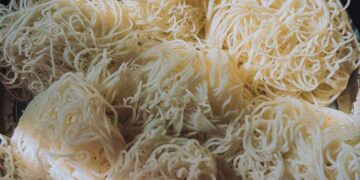
For someone accustomed to a plate of string hoppers and kiri hodi , kola kenda is a different sort of morning food. It can be a light breakfast on its own or something to drink before the rest of the household eats.
The leaves behind the colour
Gotu kola, the small round-leaved green also used in sambol, is one of the best-known choices. Other recipes use mukunuwenna, hathawariya or curry leaves. These are different plants, so two cups sold under the same name need not taste alike.
The greens are washed, crushed or blended with water, then strained for their juice in many traditional preparations. Rice is cooked separately until very soft. Coconut milk and the green liquid are combined with the rice, sometimes with garlic and a little salt. Households differ in how finely they blend the rice and whether they leave some texture in the drink.
Fresh gotu kola gives a mild, leafy bitterness. Coconut milk rounds it out without hiding it completely. A thicker cup feels closer to porridge; a thinner one is easily sipped. Neither version needs to be sweet, which is why the little piece of jaggery is such a familiar companion.
The choice of greens is also a matter of knowledge. Some plants used in traditional preparations are not everyday salad leaves. When buying kola kenda from an unfamiliar seller, asking which leaf was used is more useful than guessing from the colour. Leaves should be correctly identified and washed with safe water before preparation.
A breakfast that researchers have tried to preserve
The preparation takes work, especially when the greens have to be picked, cleaned and crushed before breakfast. That difficulty has attracted the attention of Sri Lankan food researchers for years.
A 2001 study from the University of Peradeniya examined instant kola kenda mixtures made with several herbs, rice and soya. Researchers tested processing methods, cooking time and the way people responded to the finished drinks. At an agricultural symposium in 2023, another team from Peradeniya described an instant mixture using curry leaves, gotu kola, moringa leaves, mung bean flour and unripe banana flour.
Those products were research formulations, not proof that every traditional recipe has the same nutritional properties. They do show how much effort has gone into making a familiar breakfast easier to prepare when fresh leaves and time are scarce.
At home, the preparation remains tied to the ingredients available. Some families grow gotu kola in a small patch of garden; others buy greens at the market. A morning seller may prepare only one variety, so the name of the leaf is worth asking before ordering.
The drink is at its best freshly prepared and served warm. As it sits, rice can settle towards the bottom of the cup and the surface loses some of its fresh green appearance. A small piece of jaggery on the saucer is still the usual finishing touch.