













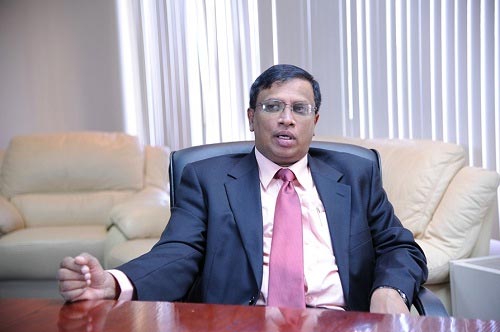
The Lessons Learnt and Reconciliation Commission (LLRC) was intended to examine the circumstances surrounding Sri Lanka’s civil war and make recommendations aimed at reconciliation and preventing a recurrence of conflict.
But for Tamil National Alliance (TNA) parliamentarian and President’s Counsel M.A. Sumanthiran, the commission’s work could not simply be treated as a final answer to questions surrounding accountability.
In this interview, Sumanthiran discussed the LLRC, the government’s approach to reconciliation, Tamil political rights and the increasingly contentious question of self-determination.
Q: Do you accept the LLRC report as a credible investigation into what happened during the final stages of the war?
Sumanthiran: The fact that a commission has investigated something does not automatically mean that every issue has been resolved.
The LLRC heard evidence and made observations, but there are serious questions about whether it had the mandate and independence necessary to deal adequately with the allegations concerning the final stages of the conflict.
There are matters that require proper investigation. The government cannot simply point to the existence of the LLRC and say that everything has therefore been investigated and settled.
Q: But the LLRC did conduct hearings and make recommendations. Isn’t that evidence that the government was willing to examine these issues?
Sumanthiran: We should distinguish between making observations and conducting a complete investigation into individual allegations.
The LLRC itself identified a number of matters that required further attention. If the commission raises questions that require investigation, the government cannot say that the matter is closed simply because the commission existed.
That is why the implementation of the recommendations is important.
Q: The government has argued that an international investigation is unnecessary because Sri Lanka has already investigated the allegations through its own institutions. What is your response?
Sumanthiran: The question is whether the investigations were sufficient, independent and credible.
If there are allegations concerning serious violations, the answer cannot simply be that an investigation was conducted. We have to ask what was investigated, how it was investigated and what conclusions were reached.
You cannot say that because there was an investigation, the allegations have automatically been disproved.
Q: Do you believe the LLRC effectively exonerated the government?
Sumanthiran: I don’t think it is accurate to reduce the LLRC process to that.
The commission made observations that the government itself has to respond to. It identified shortcomings and made recommendations relating to accountability, governance, reconciliation and the rights of citizens.
Therefore, the government cannot simply use the report as an instrument to say that every allegation has been conclusively dismissed.
Q: The TNA has continued to raise the question of Tamil political rights. What exactly does the party mean when it talks about self-determination?
Sumanthiran: Self-determination means self-determination. It does not mean something different simply because the term has been used by another organization.
Self-determination is a concept recognized in international law. The fact that the LTTE also used the language of self-determination does not mean that the Tamil people cease to have rights.
In an interview published by Sunday Lakbima in July 2012, Sumanthiran similarly argued that self-determination was a recognized principle of international law and that the rights of Tamils could not simply be dismissed because the LTTE had previously used the same terminology.
Q: Doesn’t the phrase “self-determination” create fears that the TNA ultimately wants a separate Tamil state?
Sumanthiran: The right to self-determination does not automatically mean the creation of a separate country.
Different peoples can live together within one state while having their identity and political rights recognized.
The important question is whether different communities can live together with dignity and meaningful political participation.
Q: So does the TNA accept a united Sri Lanka?
Sumanthiran: We have repeatedly said that Sri Lanka should remain one country.
But remaining one country requires addressing the grievances of the different peoples who live here.
You cannot build lasting unity by denying the political identity or legitimate rights of a particular community.
Q: What would a political solution therefore look like?
Sumanthiran: It must provide meaningful power-sharing and allow people to participate in decisions affecting their lives.
The purpose should not be to divide the country. It should be to create a political arrangement in which people have confidence that their rights are protected.
A solution must therefore go beyond simply asking people to forget the past.
Q: How important is the implementation of the LLRC recommendations to that process?
Sumanthiran: It is important, but implementation must be genuine.
Recommendations relating to disappearances, accountability, land, detention, governance and reconciliation cannot remain on paper indefinitely.
If the government genuinely wants reconciliation, it has to demonstrate that through action.
Q: The government says that reconciliation takes time. Shouldn’t the international community allow Sri Lanka to address these issues domestically?
Sumanthiran: Sri Lanka should certainly be given the opportunity to address its own problems.
But that opportunity carries a responsibility.
If domestic mechanisms are credible and produce results, there will be greater confidence in them. If they repeatedly fail to address serious allegations, then naturally questions will be raised internationally.
Q: What do you believe is the biggest obstacle to reconciliation?
Sumanthiran: The biggest obstacle is the failure to recognize that reconciliation requires addressing the concerns of all communities.
The end of the war brought an end to armed conflict, but it did not automatically resolve the political problems that existed before and during the conflict.
People need to feel that they belong equally to the country.
Q: What message would you give to the majority community?
Sumanthiran: The rights of one community should not be seen as a threat to another.
Recognizing the identity and rights of Tamils does not mean taking away the rights of Sinhalese or Muslims.
Sri Lanka can remain one country while recognizing the different identities and aspirations of its people.
The wider political debate
The interview took place during an increasingly contentious period in Sri Lanka’s post-war politics.
The LLRC report had become a central part of the government’s argument that Sri Lanka possessed its own domestic mechanism for examining the country’s wartime past. At the same time, critics argued that the report did not adequately resolve questions surrounding accountability and that its recommendations required meaningful implementation. Contemporary international reporting later recorded continuing criticism over the government’s reliance on domestic mechanisms.
Sumanthiran’s position was that reconciliation could not be achieved simply through the conclusion of a commission process. Political reform, accountability and recognition of minority rights remained central to the debate.
His comments on self-determination also became the subject of considerable political controversy. Contemporary commentary on the interview quoted him describing self-determination as a principle of international law and arguing that recognition of Tamil political rights was compatible with Sri Lanka remaining a single country.
Historical context
The interview should be understood within the political circumstances of 2012, three years after the end of Sri Lanka’s civil war.
The government under President Mahinda Rajapaksa was defending its record during the final stages of the conflict while facing increasing international pressure over allegations concerning human rights and accountability.
The TNA, meanwhile, was seeking a political settlement that would provide greater autonomy and recognition of Tamil political aspirations while operating within the framework of negotiations over a united Sri Lanka.
The LLRC therefore became more than a commission report. It became one of the central battlegrounds in the wider debate over accountability, reconciliation and Sri Lanka’s post-war political settlement.