













Railway unions began a 48-hour strike this morning, demanding changes at the top of the department. But the dispute has opened a much older question: why does Sri Lanka have 98 locomotives on record when only 50 are currently operational?
The railway did not come to a complete stop when the clock passed midnight.
That was the first thing worth noting this morning.
Several railway unions began a 48-hour strike after failing to reach an agreement with the authorities over their demand for the removal of General Manager of Railways Ravindra Pathmapriya.
But Sri Lanka Railways said office trains were still operating today. The department’s Superintendent of Train Operations said services had been arranged across the main railway lines, with only one scheduled office train not expected to operate normally.
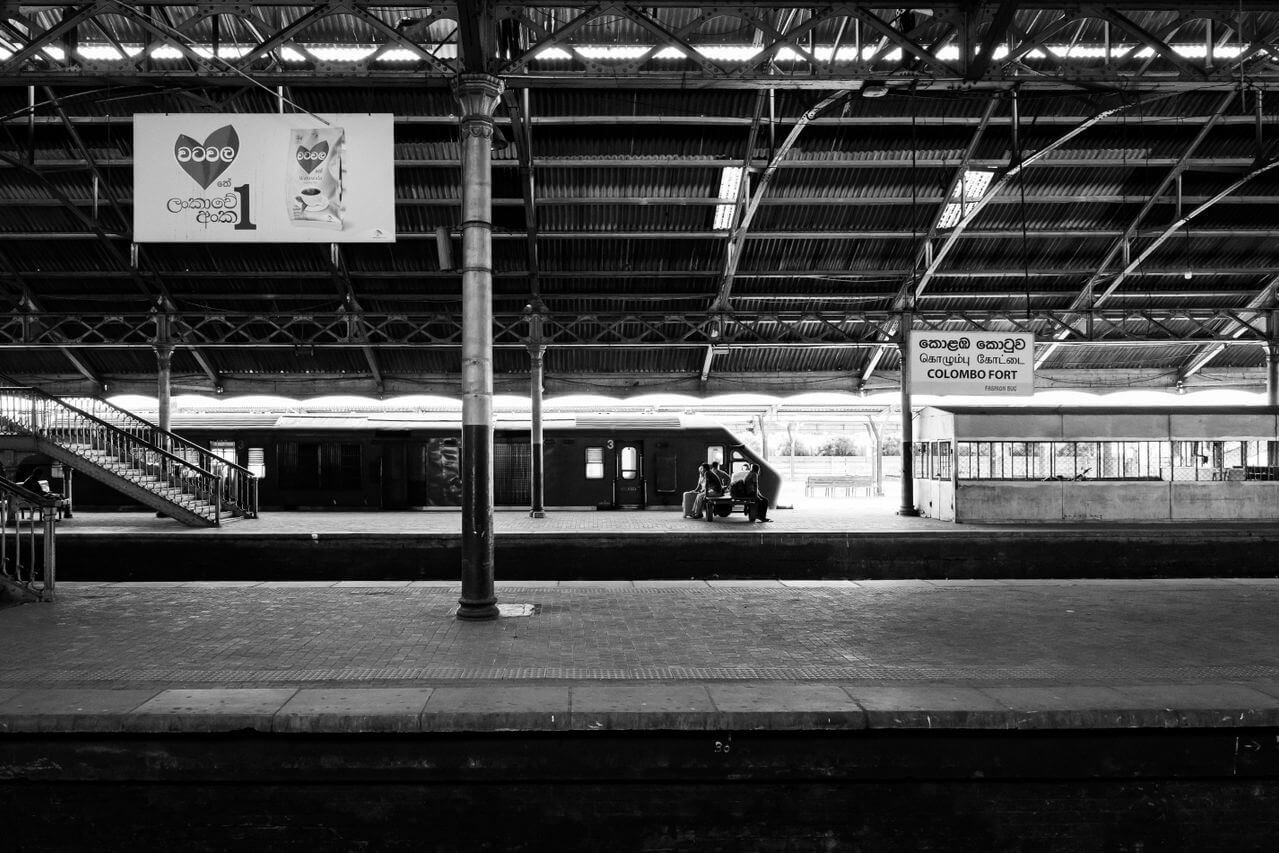
So passengers arriving at stations this morning were not necessarily looking at an empty railway.
They were looking at a railway trying to keep going while part of its workforce was on strike.
That distinction matters. So does another one.
The strike is today’s story.
The condition of the railway is not.
What is the dispute about?
The immediate dispute is over the administration of Sri Lanka Railways.
The unions want General Manager Ravindra Pathmapriya removed. They have also objected to disciplinary action involving Kasun Chamara Jayasekara, General Secretary of the Railway Station Masters’ Union, following comments made publicly about problems within the railway service.
The Government has not agreed to remove the General Manager.
Transport, Highways and Urban Development Minister Bimal Rathnayake has said he cannot agree to the unions’ demand.
The disagreement therefore remained unresolved when the strike began.
The Ministry subsequently suspended the disciplinary letter issued against Jayasekara. That did not bring the unions back from their decision to strike.
For now, the action is scheduled to continue until midnight on September 18.
What is actually running today?
Sri Lanka Railways says it has arranged services on the country’s main lines despite the strike.
That is the department’s operating plan. It is not a guarantee that every scheduled train will reach its destination on time.
The situation can change during the day as the strike continues.
Then there is the number nobody can solve with a timetable
According to a recent Railway Department report, Sri Lanka has 98 locomotives in its fleet.
Only 50 are currently operational.
The department says it needs 74 locomotives to maintain normal services.
That leaves the railway 24 locomotives short of the number it says it needs for normal operations.
It also means that roughly half of the locomotives in the reported fleet are not currently available for service.
That is not something that started at midnight.
And the problem goes beyond locomotives
The same Railway Department figures show 242 Diesel Multiple Units in the fleet.
Only 118 are operational, against a stated requirement of 193.
The shortage is therefore not confined to one type of train equipment.
There are 124 DMUs that are not currently operational, based on the department’s reported fleet and operational figures.
For commuters, the distinction between a locomotive and a power set is not especially important when the train they expected does not arrive.
The Auditor General was asking questions about this years ago
This is where the present dispute runs into an older record.
The Auditor General’s examination of Sri Lanka Railways for 2023 recorded 103 M-class engines and 133 S-class engines.
Of those, 47 M-class engines and 31 S-class engines had been taken out of service for repairs.
The audit report said those 78 engines had been kept in running sheds or at the Ratmalana workshop for periods ranging from one to seven years without being repaired.
M-class and S-class engines recorded as taken out of service for repairs in the Auditor General’s 2023 examination.
The audit did not simply record the numbers. It called for a repair plan and for the repairs to be completed.
That makes the present shortage harder to understand as a problem caused only by today’s management dispute.
The paper trail is older.
Ratmalana tells another part of the story
In May 2025, Parliament’s Committee on Public Accounts examined the railway’s performance and later sent members to inspect the Ratmalana Railway Maintenance Yard.
The committee was told that 63 railway engines and 40 power sets had been parked at the Main Mechanical Engineering Office and railway stations in Ratmalana for periods ranging from one to eight years.
The committee also found that railway workshops were underutilised.
During the inspection, MPs observed that a large part of the yard was occupied by removed machinery and equipment. They also raised concerns about the way some equipment was stored and about purchases made in quantities that were considered excessive.
The findings did not come from a union statement or a newspaper investigation.
They came from a parliamentary examination of the department.
Then there is the M11 question
Sri Lanka bought ten M11 locomotives in 2019 at Rs.765 million each.
That is the combined purchase value based on the reported price of Rs.765 million per locomotive.
The Auditor General later recorded that five of the ten M11 engines had been taken out of running and sent for repairs.
The audit also noted that technical and other defects had affected the performance of some recently purchased M-class engines.
The finding did not by itself establish wrongdoing in the procurement. It did, however, lead to a recommendation that future purchases should be based on the conditions and requirements of Sri Lanka’s railway system.
The railway has known what it wants to do next
There is no shortage of plans.
Parliament was told last month that the Government is planning several railway projects for 2027 to 2029.
Those plans include the procurement of five new locomotives and five light rail train sets for suburban passenger transport.
They also include refurbishment of Ratmalana workshops, railway station modernisation and further work on railway infrastructure.
New equipment will obviously add capacity if it is delivered and maintained properly.
But there is an awkward question underneath the plan.
What happens to the equipment Sri Lanka already owns?
A railway cannot permanently buy its way out of a maintenance problem.
At some point, the engines sitting in sheds have to become engines on tracks.
This is where today’s strike becomes a bigger story
The unions are asking for a change at the top of the department.
The Government says it cannot simply remove the General Manager because the unions are demanding it.
Neither position answers the mechanical question.
Why are so many engines unavailable?
Why did official audits find engines waiting years for repairs?
Why were workshops found to be underutilised?
Why are passengers still dealing with cancellations when the department says it needs 74 locomotives but has only 50 operational?
Those questions do not belong exclusively to one administration or one General Manager. The records stretch across several years.
That is precisely why the current dispute should not be treated as though it began and ends with the person occupying the General Manager’s office.
There is also a financial cost to every cancelled train
Parliament’s Public Accounts Committee has already recommended an audit of the daily financial loss caused by train cancellations.
That recommendation is worth paying attention to.
A cancelled train is not simply an empty timetable slot.
It can mean lost railway revenue, additional costs for alternative transport and disruption for thousands of passengers.
The railway’s own mission is to provide safe, reliable and punctual passenger and freight transport. The Ministry of Transport lists improving efficiency and removing operational bottlenecks among the department’s objectives.
The problem is that the gap between those objectives and the condition of the fleet can now be measured.
What we know this morning
The strike will end. The railway problem won’t.
By tomorrow night, the immediate dispute may be resolved. The unions may return to work. The Government and railway management may find a way to move forward.
But the numbers will still be there.
Ninety-eight locomotives on the books.
Fifty operational.
Seventy-four needed.
And a maintenance history in which official investigators have repeatedly found engines and equipment sitting unused for years.
The real test for Sri Lanka Railways is not whether it can survive a 48-hour strike. It is whether it can make the trains it already owns reliable enough that passengers stop having to wonder whether their train will arrive at all.
Related Lakbima News investigation
98 Engines. Only 50 Running. Where Did Sri Lanka’s Railway Fleet Go?
Primary documents
- Sri Lanka Railways — official website
- Ministry of Transport — Sri Lanka Railways
- Ministry of Transport — Railway objectives and official information
- Auditor General — Department of Sri Lanka Railways, 2023 Audit Report
- Parliament — COPA inspection of Ratmalana Railway Maintenance Yard
- Parliament — COPA recommendation on losses from train cancellations
- Parliament — Railway development and procurement plans for 2027–2029
Editorial note
This report separates the railway strike developing on September 17, 2026 from earlier findings concerning the condition of Sri Lanka Railways. Current operational figures are based on the latest Railway Department figures available. Historical maintenance and procurement information is drawn from official Auditor General and Parliament records. The situation may change during the 48-hour strike.