













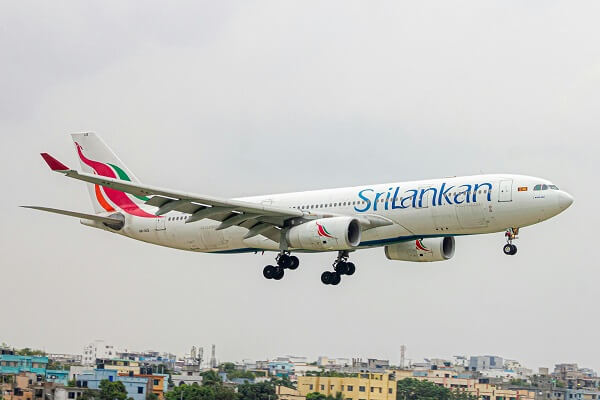
Vipul Misra has taken over as Acting CEO of Sri Lanka’s national carrier at a critical moment. The airline’s operating performance is improving, but a huge balance-sheet problem, fleet constraints, debt, foreign-exchange exposure and years of governance questions remain.
By Yash Perera
September 10, 2026
SriLankan Airlines has a new person at the top.
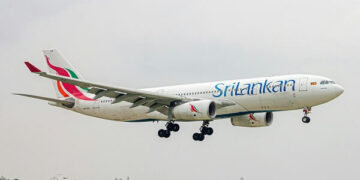
Vipul Misra, who previously served as the airline’s Head of Engineering and Accountable Manager, was appointed Acting Chief Executive Officer with effect from September 9, 2026. The appointment comes as the national carrier enters another critical stage of its restructuring and attempts to move from years of financial losses towards long-term commercial sustainability. The Morning reported the appointment on September 9.
The numbers suggest that SriLankan Airlines does not have a simple leadership problem. It has an operational problem, a financial problem, a debt problem and a governance problem — all at the same time.
The new man at the helm
Misra is not arriving at SriLankan Airlines as an outsider.
Before becoming Acting CEO, he was the airline’s Head of Engineering and Accountable Manager. He brings more than two decades of aircraft engineering and aviation leadership experience, including experience with major Indian carriers such as Air India, Vistara, IndiGo, SpiceJet, Kingfisher Airlines and Air Deccan.
His technical background is significant because some of SriLankan Airlines’ most persistent operational problems are directly connected to aircraft availability, maintenance, engine issues and spare-parts constraints.
But the appointment is also explicitly an acting appointment. That means the airline is entering its next stage of restructuring without necessarily having a permanent CEO mandate settled for the long term.
SriLankan Airlines’ publicly available Right to Information page had still listed Yasantha Dissanayake as Acting CEO when it was crawled recently, while listing Misra as Head of Engineering. This appears to reflect the fact that the corporate webpage had not yet been updated after the September 9 announcement rather than evidence of a competing appointment. SriLankan Airlines corporate information.
The numbers tell a more complicated story
The easiest way to describe SriLankan Airlines is to call it a loss-making state airline.
That description is technically correct, but it misses one important part of the story: the airline’s operating performance has been improving.
According to the latest Finance Ministry financial reporting, passenger revenue increased from Rs. 234.5 billion to Rs. 265.9 billion, while net traffic revenue rose from Rs. 298.9 billion to Rs. 333.5 billion.
Earnings before interest and tax increased by approximately 13.8% to Rs. 26.4 billion. Yet the airline still recorded a loss before tax of approximately Rs. 23.2 billion, compared with Rs. 7.6 billion previously.
The crucial distinction is between the airline’s operational performance and its overall financial position. Foreign-exchange losses and financial costs continued to weigh heavily on the bottom line.
Daily FT reported the latest financial figures .
The Rs. 340 billion hole
The government’s restructuring challenge becomes clearer when the airline’s balance sheet is examined.
The latest reported figures put SriLankan Airlines’ negative equity at approximately Rs. 339.7 billion. Total liabilities stood at approximately Rs. 544.4 billion.
These numbers show why the appointment of another executive cannot, by itself, solve the airline’s underlying problem.
SriLankan Airlines can improve its schedules, carry more passengers and generate more operating revenue — and still remain financially weak if debt, foreign-exchange exposure, finance costs and accumulated losses continue to overwhelm the operating gains.
| Indicator | Earlier period | Latest reported period |
|---|---|---|
| Passenger revenue | Rs. 234.5bn | Rs. 265.9bn |
| Net traffic revenue | Rs. 298.9bn | Rs. 333.5bn |
| EBIT | Approx. Rs. 23.2bn | Rs. 26.4bn |
| Loss before tax | Rs. 7.6bn | Rs. 23.2bn |
| Interest cost | Rs. 36.2bn | Rs. 24.7bn |
| Total liabilities | Rs. 585.1bn | Rs. 544.4bn |
| Negative equity | Rs. 403.2bn | Rs. 339.7bn |
Source: Daily FT / Finance Ministry financial reporting.
The government has already made its choice
SriLankan Airlines is not currently being pushed toward an immediate “fire sale”.
The government has repeatedly indicated that the national carrier is to be retained while efforts are made to restore its financial health and develop a commercially sustainable model.
That makes the task facing the new Acting CEO more difficult.
He is not simply managing an airline that is preparing to be sold. He is helping manage a national carrier that the government still wants to retain, while simultaneously trying to make it less dependent on the Treasury.
The government is restructuring more than the CEO position
The leadership change comes while the government is preparing a broader strategic review and restructuring of SriLankan Airlines.
The process is expected to examine the airline’s business model, financial structure, operational performance and possible long-term strategic options.
That is important because the airline’s problems cannot realistically be solved by management appointments alone.
SriLankan Airlines says its new Board focused on short-term stability, liquidity and longer-term sustainability.
The airline outlined priorities including fleet expansion, revenue growth, operational efficiency, customer experience and digital transformation.
More than 99% of the outstanding bonds participated in the exchange, while the restructuring resulted in a 16% haircut on the outstanding claim.
The engineering chief takes over as Acting CEO while the airline enters another critical phase of restructuring.
The airline itself announced that its US$175 million international bond restructuring was successfully completed, with more than 99% participation and more than 97% of bondholders voting in favour. SriLankan Airlines’ official bond restructuring announcement.
The International Monetary Fund subsequently confirmed that the debt exchange was completed on March 20, 2026 and considered the treatment consistent with the programme’s parameters. IMF Sri Lanka review.
The passenger sees a different SriLankan
Financial statements can make the airline look like a giant balance-sheet problem. But millions of passengers experience SriLankan Airlines as something much simpler: an aircraft that either arrives on time or does not.
SriLankan Airlines carried approximately 4.33 million passengers in 2024/25. Its reported passenger load factor was approximately 80.6%.
The airline’s 2024/25 annual report also highlighted fleet constraints, prolonged maintenance, global component shortages and engine maintenance challenges affecting the Airbus A320/A321neo fleet.
SriLankan Airlines Annual Report 2024/25.
There is evidence the airline can improve
SriLankan Airlines reported that its on-time performance improved to approximately 74%, compared with 69% in 2024.
The airline attributed the improvement to measures including fleet-management software, maintenance planning, faster maintenance turnaround and improved spare-parts stocking.
Source: SriLankan Airlines.
Delays are more than an inconvenience
For an airline, delays are not simply a passenger-service issue. They can become a financial problem.
Aircraft delays can lead to missed connections, disrupted crew schedules, aircraft displacement, additional handling costs and compensation.
The Auditor General has previously highlighted operational and financial concerns surrounding the airline, including fleet availability and maintenance-related issues.
This is where the new Acting CEO’s engineering background could become important. Improving aircraft availability is one of the few areas where operational decisions can have an immediate financial effect.
The airline has already cost the state heavily
The taxpayer question cannot be avoided.
According to Finance Ministry reporting, the government provided approximately Rs. 25.28 billion in equity during 2025 as part of its continuing support for the airline and restructuring process.
The same reporting showed that total liabilities declined from approximately Rs. 585.1 billion to Rs. 544.4 billion, while negative equity improved from approximately Rs. 403.2 billion to Rs. 339.7 billion.
Those improvements are significant, but they do not mean the financial problem has been solved.
If SriLankan Airlines continues to require substantial Treasury support, the government will eventually have to demonstrate that each additional rupee is buying a credible turnaround rather than simply extending an unsustainable model.
And then there is the governance question
The leadership change also comes against the backdrop of investigations into historical allegations involving SriLankan Airlines.
These investigations concern alleged irregularities and possible corruption surrounding past transactions and decisions. They are separate from Misra’s operational mandate, and allegations should not be treated as established wrongdoing unless proven.
But governance still matters to the airline’s future.
A financially troubled state enterprise cannot rebuild public confidence simply by changing its chief executive. It also needs credible procurement, transparent decision-making, strong oversight and accountability.
So, is Vipul Misra the right man?
There is a reasonable argument that he could be.
His engineering background directly matches one of SriLankan Airlines’ persistent weaknesses: aircraft availability and technical reliability.
If more aircraft are available, schedules become more reliable. If schedules become more reliable, customer satisfaction can improve. If aircraft spend less time grounded, the airline can potentially generate more revenue from the same fleet.
But SriLankan Airlines does not have a purely engineering problem.
1. The balance sheet
Negative equity remains enormous and accumulated losses remain a major structural problem.
2. Foreign-exchange exposure
Currency movements can erase part of the gains generated by improved operations.
3. Fleet constraints
Aircraft availability directly affects the number of seats the airline can sell.
4. Competition
SriLankan competes with much larger international carriers operating into Colombo.
5. State ownership
The airline has to operate commercially while remaining a national strategic asset.
6. Governance
Historical allegations and investigations continue to make governance and transparency important.
7. Political expectations
The government wants a profitable national carrier while also retaining state ownership.
The Lakbima test: What should we watch next?
The success or failure of this leadership change should not be judged by a single quarterly profit figure.
Lakbima News will be watching several indicators over the next 12 to 24 months.
Are more aircraft actually flying consistently?
Are delays and related costs falling?
Can the core airline business remain profitable?
Does dependence on public money decline?
Three possible futures
Successful turnaround
Fleet availability improves, reliability rises and the restructuring programme reduces the airline’s financial burden.
SriLankan remains state-owned but becomes increasingly commercially sustainable.
The halfway house
Passenger numbers and operating revenue continue to improve, but debt, foreign-exchange losses and other financial obligations remain heavy.
The airline becomes operationally better but still requires occasional government support.
Failed restructuring
Operating improvements fail to compensate for the balance-sheet problem.
Losses continue, fleet investment becomes expensive and the Treasury is forced to provide further support.
The verdict
SriLankan Airlines does not appear to have a simple “bad airline” problem.
The evidence points to something more complicated.
The airline is showing signs of operational recovery. Passenger revenue is rising. Net traffic revenue is rising. EBIT has improved. Liabilities and negative equity have also moved in the right direction.
At the same time, the financial hole remains enormous and the airline continues to depend on government support as its restructuring progresses.
That is why Vipul Misra’s appointment should not be judged simply on whether SriLankan Airlines can fly more reliably.
He has to help make the airline financially sustainable.
And that requires more than a new CEO.
It requires a functioning fleet, disciplined spending, competitive routes, stronger revenue management, credible governance, debt discipline and — perhaps most importantly — the political willingness to allow commercial decisions to prevail when they conflict with short-term interests.
Sources & References
Primary and official sources
- SriLankan Airlines — Annual Report 2024/25
- SriLankan Airlines — Right to Information / Corporate Information
- SriLankan Airlines — US$175 million Bond Restructuring
- International Monetary Fund — Sri Lanka Fifth and Sixth Reviews
- Ministry of Finance — Financial Statements of Key State-Owned Enterprises
- SriLankan Airlines — Five-Year Strategic Plan and Operational Improvements
Supporting media reports
© Lakbima News — Investigations